
Passionflower Benefits, Uses, Tea, Dosage, and Safety
Passionflower Benefits, Uses, Tea, Dosage, and Safety
Passionflower is an herb traditionally used to help people unwind and sleep. Usually identified as Passiflora incarnata, it is sold as dried herb, tea, and extracts. Its calming reputation has a long history, but the European Medicines Agency's assessment distinguishes traditional use from benefits established through strong clinical evidence.
This guide covers the plant's history, research, preparation, dosage questions, and safety considerations. For context on comparing different botanicals, start with our guide to herbal supplements, uses, and safety.
What is passionflower?
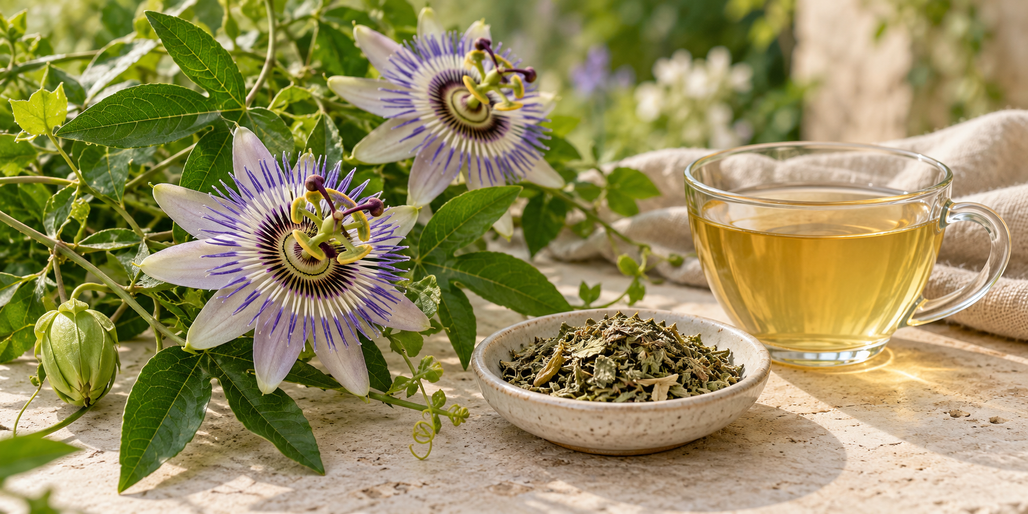
Passiflora incarnata, also called maypop or purple passionflower, is a climbing vine with elaborate flowers. In herbal preparations, herb generally means its aboveground parts, rather than just the showy blossoms. The EMA's passionflower overview identifies these aerial parts as the material used in the preparations it assesses.
Passionflower is also a common name for many related plants. Kew describes hundreds of species in the genus Passiflora, including P. edulis, commonly sold as passion fruit. Reading the Latin name helps distinguish the supplement herb from fruit products and ornamental plants.
A brief history of traditional use
Passionflower's story predates modern supplement bottles. A USDA plant guide documents food, beverage, and medicinal uses among the Cherokee, Houma, and other Native American peoples. Different plant parts served different purposes, so those traditions should not be reduced to one modern tea recipe.
The flower's English name reflects a separate history. Kew explains that Spanish Christian missionaries associated its unusual flower structures with the Passion of Jesus. That naming history helps explain the botanical term, while Indigenous uses reflect the plant's earlier cultural significance.
Passionflower benefits: what does research show?
Sleep quality
A 2011 placebo-controlled study involved 41 adults who drank passionflower tea and a comparison tea during separate one-week periods. Participants rated their sleep quality more favorably with passionflower, but that was only one of six sleep-diary measures analyzed.
This is a useful early finding, not proof that passionflower tea treats chronic insomnia. The study was small, short, and involved healthy adults with mild variations in sleep quality. It also does not establish how every commercially available tea will perform.
NCCIH reports limited evidence for improved total sleep time in adults with insomnia; findings for falling asleep and staying asleep are mixed.
Relaxation and anxiety
The EMA recognizes traditional use for mild mental stress and to aid sleep. This reflects longstanding use, with insufficient clinical evidence for firm conclusions.
NCCIH also describes preliminary anxiety research, but conclusions remain uncertain. Persistent anxiety or sleep problems deserve medical evaluation rather than repeated increases in an herbal serving.
Passionflower tea, capsules, and extracts
Green Nursery's Passionflower Herb listing identifies the product as dried, cut Passiflora incarnata herb sourced from Italy. That is the loose-herb format used for an infusion: steeping plant material in hot water and straining it.
Different formats require different label questions:
| Format | What it contains | What to check |
|---|---|---|
| Loose herb or tea bags | Dried plant material for steeping. | Species, herb weight, water amount, and brewing directions. |
| Capsules | Powdered herb or a dried extract, depending on the product. | Whether the stated milligrams describe whole herb or extract. |
| Liquid extracts | A preparation extracted into a liquid. | Concentration, solvent, serving volume, and other ingredients. |
| Blended sleep products | Passionflower combined with other ingredients. | The complete formula and amounts, not just the passionflower claim. |
The EMA describes both dried-herb and extract preparations. Their existence does not make them interchangeable. A capsule's weight alone cannot tell you how it compares with a cup of tea.
How to prepare passionflower tea and understand dosage
There is no single passionflower dose that applies to every product. As a traditional-use reference, the EMA monograph lists an infusion made with 1 to 2 grams of cut herb in 150 mL of boiling water. This describes a monograph preparation, not a personalized recommendation or Green Nursery's product directions.
For a loose-herb product, use this practical sequence:
- Read the package directions and confirm the intended serving weight.
- Measure by weight when directions use grams. A teaspoon's weight changes with the cut and how tightly it is packed.
- Add the specified amount of hot water and steep for the time given on the label.
- Strain out the plant material before drinking.
The Green Nursery listing describes steeping and straining but does not currently provide a measured serving or steeping time. Check the package or ask for those details instead of borrowing directions from an extract.
For capsules or liquids, follow that preparation's directions and review suitability with a pharmacist if you take medicines. An extract ratio is not a reliable shortcut for predicting the effect of homemade tea.
Passionflower side effects and precautions
NCCIH highlights these concerns:
- Side effects: drowsiness, dizziness, and confusion are possible.
- Pregnancy: avoid passionflower because it may trigger uterine contractions.
- Breastfeeding: safety information is limited.
- Surgery: tell your care team about use within two weeks of surgery. Passionflower may interact with anesthesia and related medicines.
The EMA assessment warns about driving and operating machinery and does not recommend use in children under 12 because data are insufficient. This adult guide should not be used to choose a child's dose.
Seek advice if symptoms worsen or continue beyond two weeks, as the EMA advises. Ongoing sleep disruption deserves attention to its cause.
Is passionflower legal?
Passionflower products are sold in the United States, including the dried herb discussed here. Their regulatory status depends on how they are formulated, labeled, and marketed. The FDA explains that dietary supplements do not receive premarket approval for safety and effectiveness. Retail availability is therefore not FDA approval of a sleep or anxiety treatment.
For international orders or travel, check the destination's current import and product rules. A U.S. listing does not establish permission to import the same herb or extract elsewhere.
What to check before use
- Identity: look for Passiflora incarnata and the stated plant part.
- Format: distinguish cut herb, powdered herb, and extract.
- Directions: confirm the serving and preparation instead of estimating.
- Suitability: review your medicines, health circumstances, and reason for use with a qualified professional.
Frequently asked questions
Does passionflower tea contain caffeine?
Green Nursery lists its single-ingredient passionflower herb as caffeine-free. A blended tea may contain caffeinated ingredients, so check the complete ingredient list.
Can I use passion fruit juice instead?
No direct substitution is established. Fruit juice and an infusion of aerial herb involve different plant parts and often different species. The tea research discussed here does not demonstrate the same effects from juice.
Is daily passionflower use well studied?
No. NCCIH describes possible short-term safety for tea up to seven nights and daily extracts up to eight weeks. Those windows do not establish indefinite safety or an eight-week allowance for every tea.
Can I combine it with alcohol or sleep medicines?
Given its potential for drowsiness, avoid combining it with alcohol or sedating medicines without clinical guidance. Have a pharmacist review the complete combination, including other herbs. A blend being sold does not prove that combination is suitable for you.
Popular Products
Check out these customer favorites.