
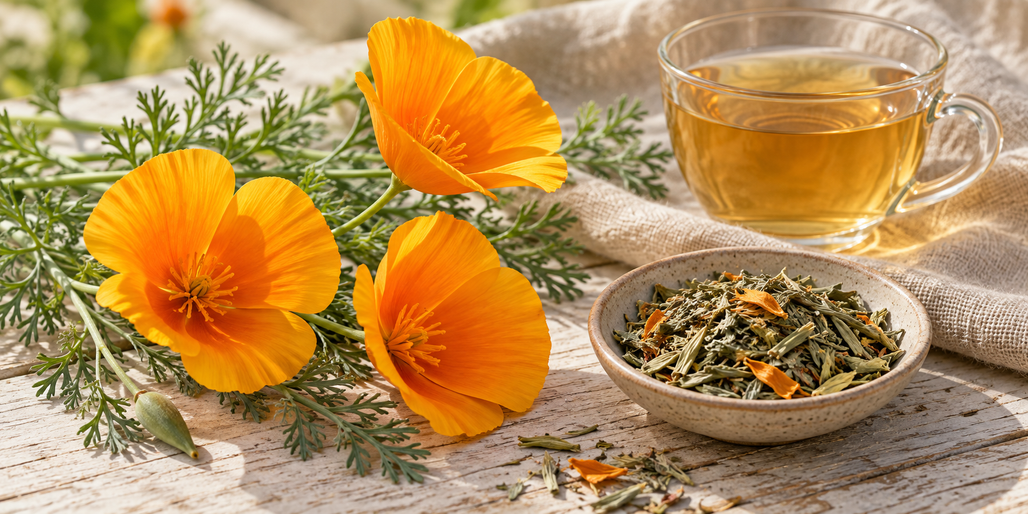
California Poppy Benefits, Uses, Dosage, and Safety
California Poppy Benefits, Uses, Dosage, and Safety
California poppy is a flowering herb traditionally used for relaxation and sleep. Its botanical name is Eschscholzia californica. The European Medicines Agency recognizes traditional uses for mild mental stress and sleep, while distinguishing that history from strong clinical proof. The preparation matters when considering possible benefits.
This guide covers the plant's history, research, tea and extract differences, dosage, and precautions. For help putting individual herbs into context, see our guide to herbal supplements, uses, and safety.
What is California poppy?
California poppy belongs to the poppy family, Papaveraceae. It is a different species from opium poppy, Papaver somniferum. UC Cooperative Extension's botanical history explains the distinction and records traditional food and medicinal uses among Native peoples. That history should not be treated as a modern dosing instruction.
Naturalist Adelbert von Chamisso named the plant in honor of expedition physician and entomologist J. F. Eschscholtz, as the same Extension account describes. Its familiar golden flowers later became a state symbol: California officially designated it the state flower in 1903.
In herbal products, “aerial parts” means the material growing above ground. Always check the listed plant part rather than assuming a product contains only flowers.
California poppy benefits: what does research support?
Relaxation and sleep
The EMA's assessment concerns powdered dried aerial herb used in adult oral preparations. Its conclusions rest on longstanding use and insufficient clinical evidence to establish well-supported medicinal efficacy. This supports describing California poppy as a traditional calming herb without promising that it treats an anxiety disorder or insomnia.
A 2026 randomized, placebo-controlled trial reported improvements in insomnia and anxiety scores after a four-week course of a supplement combining California poppy and valerian extracts. The result is encouraging, but it cannot show how much benefit came from California poppy alone. It also does not establish the effect of a loose-herb infusion.
Other traditional uses
Health Canada's 2025 monograph includes traditional use for restlessness, nervousness, and pain relief. “Traditional use” is a meaningful qualification. It should not become a claim that California poppy is a proven pain treatment or a replacement for prescribed care.
California poppy tea, powdered herb, and extracts
Green Nursery's California Poppy Herb listing identifies Eschscholzia californica, dried cut aerial portions, and USA origin. This is loose herb for preparation.
- Tea or infusion: dried herb is steeped in hot water, then strained.
- Powdered herb: finely ground plant material is swallowed, often in capsules or tablets.
- Extract or tincture: constituents are extracted into a preparation with its own concentration and directions.
A capsule can contain plain powder or an extract. Compare the ingredient description, plant part, and serving information before comparing milligram amounts. The shared botanical name does not make these forms interchangeable.
California poppy dosage and tea preparation
There is no single dose that applies to every preparation. For context, the EMA monograph lists adult doses of 480 to 600 mg per dose and 960 to 1,500 mg daily for powdered herbal substance in solid oral forms. These figures describe that preparation, not directions for Green Nursery's cut herb or an extract.
The Green Nursery page describes steeping the dried herb in hot water and straining it, but does not specify a serving weight, water quantity, or steeping time. Check the package or request those directions before making a serving.
Use a scale when directions specify grams. A teaspoon varies with the size and packing of the cut herb. Avoid converting a capsule dose into a tea recipe or increasing the amount because an effect is not immediately noticeable.
California poppy side effects and precautions
Drowsiness is a practical concern. Health Canada advises avoiding alcohol and products that cause drowsiness or have analgesic effects. Ask a pharmacist before combining it with sleep medicines, sedating antihistamines, pain medicines, or other calming supplements. Do not drive if affected.
The EMA monograph does not recommend use during pregnancy, breastfeeding, or under age 18 because adequate safety information is lacking. Avoid it if you have a known allergy to the ingredient. Consult a healthcare professional if symptoms worsen or continue beyond two weeks of use.
Interaction research also depends on preparation. A USDA-associated laboratory study found that certain extracts affected drug-processing pathways, while the tested tea preparation did not affect the pathways examined. These laboratory results neither establish a clinical interaction nor prove that every tea is interaction-free.
Reliable frequencies for side effects are not established. Stop use and seek advice if an unexpected reaction occurs rather than assuming that an herbal product cannot be responsible.
Is California poppy legal?
California poppy is sold in the United States as a botanical herb. The federal definition of opium poppy in 21 U.S.C. 802(19) names Papaver somniferum, a different species. California poppy should not be classified as opium poppy simply because the common names overlap.
Retail sale is not FDA approval. The FDA explains that supplements do not receive premarket approval, and products marketed to treat diseases are subject to drug regulation. Check destination rules before international purchases or travel.
Wildflower picking is a separate issue. California's wildlife department explains that state-flower status does not create a special picking ban, but landowner permission and other rules matter. At the Antelope Valley California Poppy Reserve, picking wildflowers is prohibited.
What to check before use
- Identity: confirm Eschscholzia californica and the plant part.
- Form: distinguish cut herb, powder, and extract.
- Directions: obtain a clear serving and preparation method.
- Suitability: review medicines, alcohol use, and personal health considerations.
Frequently asked questions
Can California poppy affect a drug test?
A negative result cannot be guaranteed from the plant name alone. Botanical identity does not establish a particular product's purity or how a specific test will respond. If testing matters, discuss the exact product with the testing provider or medical review officer and retain its ingredient information.
Does California poppy tea contain caffeine?
Green Nursery lists its plain California poppy herb as caffeine-free. Check every ingredient in a blend, since added tea leaves or other botanicals can change that.
How quickly does California poppy work?
The research discussed here does not establish a predictable onset time for loose-herb tea. A study lasting several weeks cannot tell you that one cup will work within a particular number of minutes.
Can I take California poppy every night?
Short-term research on particular preparations does not establish indefinite safety. Persistent sleep problems deserve evaluation, and continued use should be reviewed with a healthcare professional rather than automatically becoming a nightly habit.
Popular Products
Check out these customer favorites.