
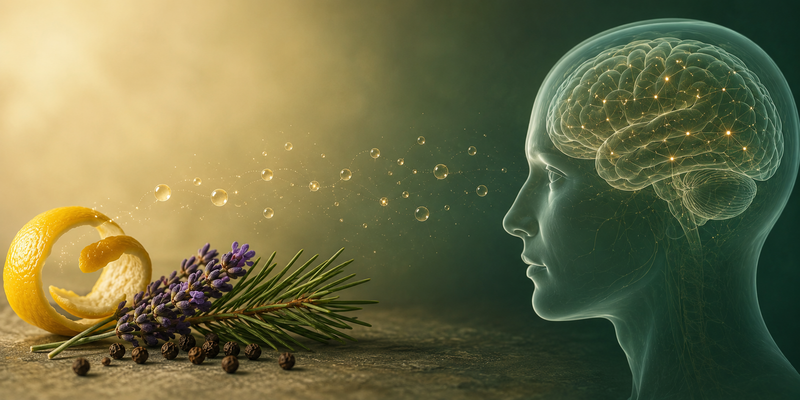
Cannabis Terpene Effects on the Mind: What Science Shows
How Do Cannabis Terpenes Affect the Mind?
Cannabis terpenes may influence biological or subjective effects under some conditions, but the evidence does not support using a terpene name to predict mood, focus, memory, sedation, or intoxication. Delta-9 THC remains the main driver of the familiar cannabis high and many acute changes in attention, memory, perception, and judgment.
The most useful way to understand cannabis terpene effects is to separate controlled human findings from animal studies, cell experiments, aroma associations, and marketing shorthand. For the broader foundation—what terpenes are, how they shape aroma, and how they appear on laboratory reports—start with Green Nursery’s complete guide to terpenes in cannabis and hemp.
This article focuses narrowly on the mind: mood, anxiety-like feelings, memory, attention, and the question of whether terpenes change THC’s effects.
“Effects on the mind” can describe several different questions
People often use “mental effects” as if it means one thing. It can refer to intoxication, changes in mood, anxiety-like feelings, alertness, sleepiness, memory, attention, decision-making, or the way another compound such as THC feels. Those are different outcomes, and evidence for one cannot be used to promise all the others.
It also helps to distinguish intoxicating from biologically active. A compound can interact with a biological pathway without producing a cannabis-like high. Conversely, a citrus, pine, floral, or earthy aroma can be noticeable without proving that the same terpene will change cognition or mood at the amount and route used.
For cannabis products, cannabinoid content comes first. The National Institute on Drug Abuse’s cannabis-and-the-brain resource explains that THC can disrupt thinking, attention, decision-making, and short-term memory. Green Nursery’s Delta-9 THC guide explains why the amount, route, formulation, tolerance, and setting matter. A terpene label does not override those factors.
What controlled human studies show about cannabis terpene effects
Human experiments that isolate a terpene and systematically vary THC exposure remain rare. Two recent double-blind studies are especially useful because they tested common claims directly rather than asking people to rate commercial strain names.
| Study | Main finding | What it does not prove |
|---|---|---|
| 2024 D-limonene and THC trial; 20 healthy adults | D-limonene alone did not differ from placebo on the measured pharmacodynamic outcomes. With 30 mg THC, the highest tested D-limonene condition reduced ratings of “anxious/nervous” and “paranoid”; other acute effects were unchanged. | It does not show that every limonene-rich product is uplifting, treats anxiety, works at ordinary product concentrations, or produces the same result when swallowed. |
| 2025 alpha-pinene and THC trial; 19 healthy adults | Alpha-pinene alone did not differ from placebo. It did not reduce THC-related working-memory or cognitive impairment and did not meaningfully alter other measured acute effects. | It does not settle every possible alpha-pinene dose, route, population, or whole-plant combination, but it directly contradicts a common claim that pinene reliably protects memory during THC exposure. |
| 2020 cell-based cannabinoid-receptor study | Five tested terpenes, alone and in mixtures, did not show the proposed direct or modifying effects at CB1 or CB2 under the study conditions, apart from a possible weak beta-caryophyllene interaction with CB2. | It does not prove that terpenes have no biological activity through any pathway. It shows that one popular explanation—direct CB1 or CB2 modulation—did not account for an effect in that model. |
The 2024 randomized D-limonene trial is a meaningful signal because it tested isolated compounds, multiple doses, subjective effects, cognition, vital signs, and blood concentrations. It is still a small laboratory study. Only 12 participants completed the highest-dose 30 mg THC plus 15 mg D-limonene condition, and the result concerned selected THC-induced anxiety ratings—not a general mood lift.
The 2025 randomized alpha-pinene trial tested doses at and above amounts expected in retail cannabis flower. Alpha-pinene did not counter THC-related memory impairment in that sample. The result is especially important for safety: a pine-forward profile should never be treated as protection against impairment or as a reason to drive.
Together, these studies show why “terpenes change the high” is too broad. One terpene modified a narrow subjective outcome under one condition; another failed to modify the outcome it was expected to change. The responsible conclusion is neither “terpenes do everything” nor “terpenes do nothing.” It is that compound, dose, route, outcome, and study design all matter.
Popular terpene claims often outrun the evidence
Many terpene charts collapse aroma descriptions, animal research, essential-oil studies, consumer anecdotes, and cannabis outcomes into a single “effects” column. That format makes tentative findings look settled. Reviews of pinene and linalool describe possible cognitive and affective activity, but also emphasize the limited evidence base and the need for better translation from preclinical models to people. See the peer-reviewed review of pinene, linalool, cognition, and mood.
| Common marketing shorthand | What the evidence supports | Responsible interpretation |
|---|---|---|
| “Limonene is uplifting” | One small controlled human study found a selective reduction in certain THC-related anxiety ratings at the highest tested combination. D-limonene alone did not differ from placebo on measured acute outcomes. | Promising interaction evidence is not proof of a universal mood effect or anxiety treatment. |
| “Pinene protects memory and focus” | The first controlled alpha-pinene/THC human study did not find protection against THC-related memory or cognitive impairment. | Do not use a pinene label to predict alertness, safe driving, or preserved judgment. |
| “Myrcene causes couch-lock” | Myrcene has preclinical pharmacology and a long history of association with sedating cannabis descriptions, but controlled human evidence linking ordinary cannabis myrcene levels to a predictable sedating experience is lacking. | “Earthy” or “myrcene-dominant” describes chemistry or aroma more reliably than it predicts sleepiness. |
| “Linalool is calming” | Animal studies and research on lavender or essential-oil mixtures suggest possible effects worth studying. Those preparations, doses, and routes are not interchangeable with the linalool in a cannabis product. | Floral aroma is a sensory description, not a treatment claim or guaranteed emotional outcome. |
| “Beta-caryophyllene relieves stress” | Laboratory and animal research has examined CB2 and other pathways, but controlled evidence does not establish that a caryophyllene-rich cannabis product reliably changes mood in people. | A peppery profile may help describe aroma; it should not be used as a mental-health recommendation. |
“No good human evidence yet” does not mean a compound can never have an effect. It means the claim has not been demonstrated well enough to predict an individual consumer’s outcome. That distinction protects both scientific curiosity and reader safety.
The entourage effect is a testable hypothesis, not a product guarantee
The entourage-effect idea proposes that cannabis constituents may interact so that a mixture behaves differently from one compound alone. That broad proposition can involve many possible compounds, pathways, doses, and outcomes. It should not be reduced to “every terpene strengthens THC” or “full spectrum is always better.”
A peer-reviewed CB1 and CB2 receptor experiment found no support for direct cannabinoid-receptor modulation by the five tested terpenes under its conditions. The D-limonene human trial later found a selective interaction with THC, while the alpha-pinene trial did not. These results can coexist because an interaction might be compound-specific, outcome-specific, or mediated through another pathway.
The practical lesson is simple: “entourage effect” should introduce a research question, not end one. A product label must still show the cannabinoids, amounts, ingredients, route, and batch-specific test results. A marketing phrase cannot substitute for those facts.
Why a terpene profile cannot predict the same experience for everyone
Even an accurate terpene panel captures only part of a product’s chemistry. Several variables can change what a person experiences:
- Cannabinoid composition: Delta-9 THC, THCA that becomes THC when heated, CBD, and other cannabinoids may matter more to acute mental effects than the dominant terpene.
- Amount: Detecting a terpene does not show that the dose is high enough to reproduce a laboratory effect.
- Route: Smelling a flower, inhaling vapor, inhaling smoke, and swallowing a formulation create different exposures. A finding from one route cannot automatically be transferred to another.
- Product matrix: Isolated compounds in a laboratory are not identical to flower or a finished extract containing many cannabinoids, terpenes, and other ingredients.
- Individual response: Tolerance, prior experience, age, medications, health conditions, food, alcohol or other substances, and the setting can change subjective effects and risk.
- Measurement limits: Laboratories may test different terpene panels, use different methods, or report different units and limits of detection.
- Batch variation: A cultivar name is not a fixed chemical formula. Genetics, cultivation, harvest, processing, and storage can change measured composition.
This is why a dominant-terpene badge should not be translated into “energizing,” “creative,” “focused,” or “sleepy” as if those were laboratory results. The badge identifies a measured or claimed chemical feature; the mental-effect language is a separate claim requiring separate evidence.
How to use terpene information responsibly
- Read the cannabinoid panel first. Check Delta-9 THC, THCA, total THC, CBD, and the units. Do not infer intoxication from the terpene panel.
- Match the report to the batch. The product name, lot number, and test date should correspond to the package. Green Nursery’s guide to reading a CBD flower lab report explains the main fields and limitations.
- Use terpenes first as sensory information. Citrus, pine, floral, herbal, peppery, and earthy descriptions can help compare aroma preferences without promising a mental outcome.
- Compare like with like. Use the same units and, where possible, similar product types and laboratory methods. “Not detected,” “below the reporting limit,” and “not tested” are not interchangeable.
- Reject guaranteed-effect language. Be skeptical of claims that a terpene profile guarantees energy, sleep, calm, focus, creativity, pain relief, or protection from THC impairment.
- Never use a terpene as an impairment shield. Pinene, limonene, CBD, coffee, or a familiar strain name does not establish that someone is safe to drive or operate machinery after THC exposure.
- Check the complete product. Review ingredients, warnings, serving information, contaminant panels, and the relevant batch-specific certificate of analysis. A terpene result alone does not prove purity or safety.
If a person uses medication, has a psychiatric or neurological condition, is pregnant or breastfeeding, or is considering cannabis for a symptom, the appropriate next step is individualized advice from a qualified healthcare professional—not a terpene-effects chart.
Frequently asked questions
Do terpenes get you high?
Terpenes do not produce the conventional Delta-9 THC high. A terpene ingredient or terpene-rich cannabis product can still occur alongside intoxicating cannabinoids, so the complete cannabinoid panel and formulation determine the relevant intoxication risk.
Are terpenes psychoactive?
“Psychoactive” is a broad term for something that affects mental processes, so it can be used too loosely to be helpful. Some terpenes show biological or behavioral activity in laboratory, animal, essential-oil, or limited human research. That does not mean cannabis terpenes are intoxicating like THC or that a terpene profile reliably predicts a mental effect.
Can terpenes affect mood?
Possibly under specific conditions, but the human cannabis evidence is limited. The strongest direct example is a small 2024 trial in which a high D-limonene dose selectively reduced certain anxiety-like ratings caused by 30 mg THC. That finding is not evidence that every limonene-rich product improves mood.
Does limonene reduce anxiety?
It should not be described as an established anxiety treatment. In one controlled trial, D-limonene reduced selected anxiety-like ratings caused by a high THC dose, while D-limonene alone did not differ from placebo on measured acute outcomes. The sample was small, the route was vaporization, and the highest combination was completed by 12 participants.
Does pinene improve memory or focus?
The best direct human evidence does not support that promise. In a 2025 controlled study, inhaled alpha-pinene did not reduce THC-related working-memory or cognitive impairment and did not produce significant acute effects by itself compared with placebo.
Can terpenes cancel THC impairment?
No terpene has been shown to cancel THC impairment reliably. The alpha-pinene trial specifically failed to protect memory, and D-limonene did not reverse THC’s other cognitive or physiological effects. Do not drive, work at height, or operate machinery based on a terpene label or subjective feeling of alertness.
Can a terpene profile predict whether a product feels uplifting or relaxing?
Not reliably. A profile can describe compounds measured in a particular sample. It does not account for the full cannabinoid content, actual terpene dose, route, other ingredients, tolerance, individual biology, setting, or expectations. Treat effect labels as unverified shorthand unless a claim is supported by relevant controlled evidence.
Do hemp terpenes affect the brain differently from cannabis terpenes?
A named terpene has the same chemical identity whether it came from legally defined hemp, another cannabis plant, citrus, pine, or another source. What changes is purity, dose, mixture, route, and the rest of the product. “Hemp-derived” does not mean non-intoxicating, universally legal, FDA approved, safe to inhale, or safe for drug testing.
Can terpenes make a drug test positive?
Terpenes are not THC. However, a cannabis or hemp product marketed around terpenes may also contain Delta-9 THC, THCA, or other cannabinoids relevant to testing. No product should be treated as drug-test safe merely because the label emphasizes terpenes, CBD, or hemp.
Is a higher terpene percentage better for mental effects?
No universal “better” percentage has been established. A higher reported total does not guarantee a stronger aroma, preferred experience, improved mood, greater focus, better safety, or higher overall quality. Product type, panel scope, method, age, storage, and the complete laboratory report still matter.
Are concentrated terpenes safe to inhale?
Safety depends on the compound, purity, concentration, formulation, device, temperature, route, and individual sensitivities. A terpene’s natural occurrence in a plant does not make every concentrated or inhaled use safe. Do not add isolated terpenes to a product or device unless the formulation is specifically designed and labeled for that use.
Popular Products
Check out these customer favorites.