
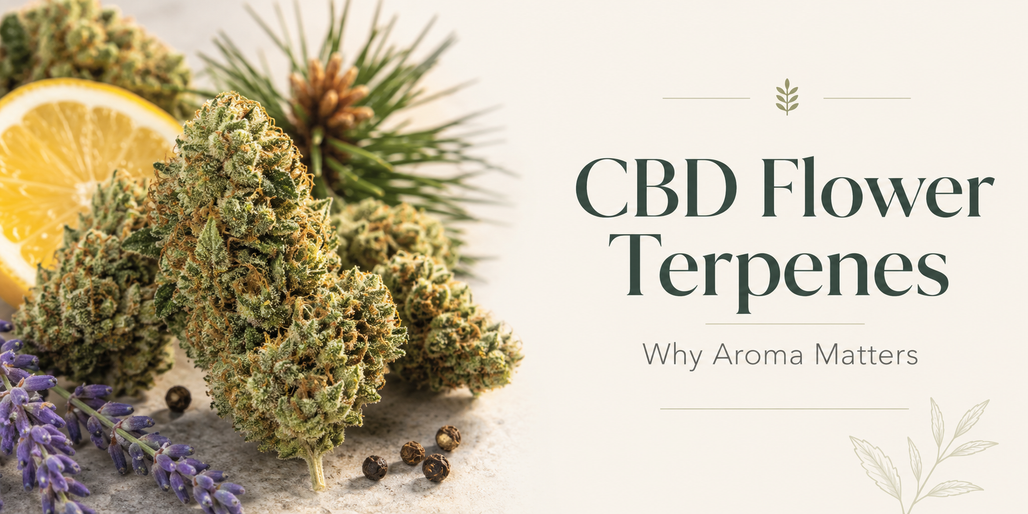
CBD Flower Terpenes: Why Aroma Matters
CBD Flower Terpenes: Why Aroma Matters
One of the first things people notice about CBD flower is its aroma. Some strains smell bright and citrusy, while others lean earthy, piney, floral, sweet, or even gas-like. These differences are not random. They come largely from naturally occurring compounds called terpenes.
Terpenes play an important role in how hemp flower smells, tastes, and expresses its unique character. Understanding CBD flower terpenes can help you compare strains more confidently, evaluate product quality, and better understand why one hemp flower may seem very different from another even when cannabinoid levels are similar.
This article is part of our CBD Flower education cluster. If you're new to hemp flower, start with our complete guide: What Are CBD Buds? A Clear Guide to CBD Bud, Hemp Flower, and What to Expect. It provides the foundation for understanding how terpenes fit into the overall hemp flower experience.
What Are Terpenes?
Terpenes are naturally occurring aromatic compounds found throughout nature. They are present in countless plants, including citrus fruits, pine trees, lavender, black pepper, hops, and hemp.
In hemp flower, terpenes are produced within the same trichomes that contain cannabinoids such as CBD, CBG, and THC. These compounds help create the distinctive aromas associated with different strains.
For example, when you smell fresh lemons, pine needles, or lavender flowers, you are experiencing terpenes. Hemp plants produce many of these same compounds, often in unique combinations that create a strain's signature aroma profile.
According to research published through the National Center for Biotechnology Information (NCBI), terpenes are found throughout the plant kingdom and contribute significantly to aroma, flavor, and plant chemistry.
Why Does CBD Flower Smell Different From Strain to Strain?
The primary reason CBD flower smells different from one strain to another is its terpene profile.
A terpene profile is the specific combination and concentration of terpenes found within a particular flower. Just as different grape varieties produce different wines, different hemp genetics produce different terpene profiles.
Two CBD flower strains may contain similar CBD percentages while offering completely different aromas. One may smell sweet and fruity, while another smells earthy and pine-forward. The difference often comes down to terpene composition rather than cannabinoid content.
Growing conditions, curing methods, harvesting practices, and storage conditions can also influence hemp flower aroma and terpene preservation.
If you want to compare how different hemp varieties express aroma, see our CBD Flower Strain Guide.
Why CBD Flower Aroma Can Be a Sign of Quality
A strong, pleasant aroma is often one indicator of fresh CBD flower. While aroma alone cannot determine quality, it can provide useful clues about how the flower was grown, cured, and stored.
Fresh hemp flower typically retains more of its natural terpene content. As flower ages or is stored improperly, some terpenes may gradually degrade or evaporate.
Quality CBD flower often exhibits:
- Distinct strain-specific aromas
- Noticeable terpene expression
- Fresh and vibrant scent profiles
- Well-preserved flower structure
- Proper curing and storage
In contrast, flower that smells stale, musty, grassy, or lacks aroma altogether may indicate poor curing, improper storage, or age-related terpene loss.
If you're shopping for fresh hemp flower, browse our CBD flower collection and compare terpene-rich strains backed by third-party testing.
The Most Common Terpenes in Hemp Flower
Most CBD flower strains contain dozens of terpenes, but a handful appear frequently across many popular hemp varieties.
Myrcene
Myrcene is one of the most common terpenes found in hemp and cannabis plants. It often contributes earthy, herbal, musky, and slightly fruity aromas.
Many hemp flower strains with kush-like or earthy characteristics contain significant amounts of myrcene. Mangoes, hops, and lemongrass also contain this terpene.
Limonene
Limonene is responsible for many of the bright citrus aromas found in hemp flower. It is commonly associated with lemons, oranges, and other citrus fruits.
CBD flower strains rich in limonene often feature fresh citrus notes and vibrant aroma profiles.
Pinene
As the name suggests, pinene contributes pine-like aromas commonly associated with forests, evergreen trees, and fresh outdoor environments.
Pinene frequently appears in hemp flower varieties that exhibit crisp, woodsy, or pine-forward characteristics.
Beta-Caryophyllene
Beta-caryophyllene contributes spicy, peppery, and slightly woody notes. It is also found in black pepper, cloves, cinnamon, and other spices.
Many hemp flower strains use caryophyllene as part of a more complex aroma profile that balances sweetness, earthiness, and spice.
Linalool
Linalool is most commonly associated with lavender. It contributes floral, sweet, and delicate aromatic qualities to many hemp strains.
Although usually present in smaller amounts than some other terpenes, linalool can play an important role in shaping a flower's overall aroma profile.
Do Terpenes Affect the Hemp Flower Experience?
Researchers continue studying how terpenes interact with cannabinoids and other compounds naturally present in hemp plants.
While cannabinoids such as CBD receive much of the attention, many hemp enthusiasts believe terpene profiles contribute significantly to the overall character of different flower strains.
This is one reason two CBD flower strains with similar cannabinoid percentages may still offer noticeably different aroma and flavor profiles.
Current terpene research continues to explore these complex relationships, but consumers should avoid assuming that a specific terpene guarantees a particular outcome or effect.
For additional research, resources from PubMed and the National Center for Complementary and Integrative Health provide useful educational background on cannabinoids and cannabis-related compounds.
How Terpene Profiles Appear on Lab Reports
Many premium CBD flower products include terpene analysis as part of their third-party lab testing.
A terpene report may show:
- Total terpene percentage
- Individual terpene concentrations
- Dominant terpene rankings
- Complete terpene profile breakdowns
Reviewing terpene analysis can provide a more complete picture of a flower's characteristics than cannabinoid percentages alone.
For a complete guide to understanding hemp flower testing, read How to Read a CBD Flower Lab Report.
You can also review available CBD flower lab reports and COAs when comparing strains.
Freshness, Genetics, and Terpene Preservation
Terpene quality starts long before harvest. Genetics play a major role in determining which terpenes a strain can produce, while cultivation practices influence how well those terpenes develop.
After harvest, proper drying and curing help preserve terpene content. Storage conditions also matter. Excessive heat, light exposure, and air exposure can gradually reduce terpene levels over time.
This is why freshness is often closely tied to hemp flower aroma. Well-preserved flower typically retains more of the terpene profile that makes each strain unique.
The USDA Hemp Program and university hemp research programs continue to provide educational resources on cultivation and quality standards throughout the hemp industry.
Comparing CBD Flower by Terpene Profile
As you explore different CBD flower strains, terpene profiles can become a useful comparison tool.
Rather than focusing exclusively on CBD percentage, many experienced hemp shoppers compare:
- Terpene profiles
- Total terpene content
- Aroma characteristics
- Cannabinoid profiles
- Lab testing results
- Freshness indicators
This approach often provides a more complete understanding of what makes one hemp flower strain different from another.
Popular strains such as Hawaiian Haze, Lifter, Sour Space Candy, and Sour Suver Haze are good examples of how terpene profiles can create very different aroma experiences.
Explore CBD Flower Strains
Every CBD flower strain has its own combination of cannabinoids and terpenes. Some emphasize citrus-forward limonene profiles, while others lean heavily into myrcene, pinene, caryophyllene, or more complex terpene combinations.
Browse our CBD flower collection, explore CBD prerolls, compare CBG flower, and review lab reports to better understand terpene diversity across hemp products.
Additional Resources on Hemp and Terpenes
- National Center for Biotechnology Information
- PubMed Research Database
- NCCIH Cannabis and Cannabinoids Overview
- USDA Hemp Program
- Cornell Hemp Program
- Penn State Hemp Resources
- Oregon State Hemp Resources
- FDA Cannabis and CBD Guidance
The Bottom Line
CBD flower terpenes play a major role in aroma, flavor, freshness, and overall flower character. Understanding terpene profiles can help you compare strains more effectively and better evaluate hemp flower quality.
Whether you're exploring myrcene-rich flower, citrus-forward limonene strains, piney pinene varieties, or complex terpene blends, aroma provides valuable insight into a flower's genetics, cultivation, and preservation.
To continue learning about hemp flower, visit our CBD Buds Hub, explore our CBD Flower Strain Guide, and review our CBD Flower Lab Report Guide.
Disclaimer: This content is for educational purposes only and is not medical advice. Research on terpenes and cannabinoids continues to evolve, and individual experiences may vary.
Popular Products
Check out these customer favorites.