
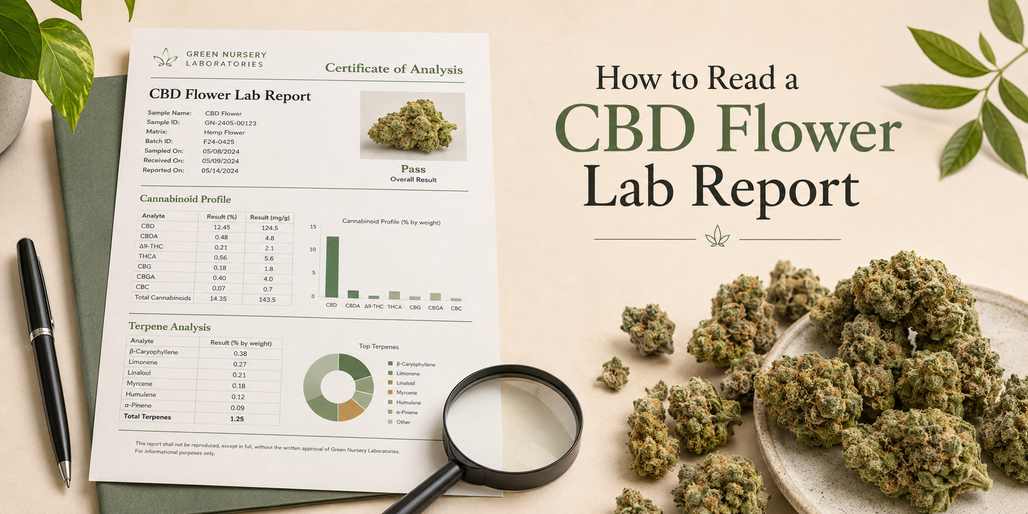
How to Read a CBD Flower Lab Report
How to Read a CBD Flower Lab Report
When shopping for CBD flower, one of the most valuable tools available is the product's lab report. Also known as a Certificate of Analysis (COA), a lab report provides independent verification of what is actually in a hemp flower product.
A quality CBD flower lab report can help you evaluate cannabinoid potency, terpene content, product safety, and hemp compliance before making a purchase. While these reports may look intimidating at first, understanding a few key sections can make comparing products much easier.
If you're new to hemp flower, start with our comprehensive guide: What Are CBD Buds? A Clear Guide to CBD Bud, Hemp Flower, and What to Expect. Understanding the basics of CBD flower makes reading lab reports much easier.
What Is a CBD Certificate of Analysis?
A CBD Certificate of Analysis is a third-party laboratory report that verifies the contents of a hemp product. Rather than relying solely on product labels or marketing claims, a COA provides actual test results from an independent laboratory.
For CBD flower, these reports typically include cannabinoid percentages, terpene analysis, contaminant testing, batch information, and compliance data. Reputable hemp brands make these reports available so customers can verify product quality and transparency.
Think of a COA as a product's report card. It helps confirm whether the flower contains the cannabinoids advertised on the label and whether it meets safety and regulatory standards.
Organizations such as the FDA, the USDA Hemp Program, and independent testing laboratories all play a role in establishing quality and compliance expectations within the hemp industry.
Start With the Product and Batch Information
Before reviewing potency numbers, confirm that the lab report actually belongs to the product you're considering.
- Product or strain name
- Batch or lot number
- Date of testing
- Laboratory name
- Sample description
The batch number on the package should match the batch number listed on the COA. Since cannabinoid and terpene levels can vary between harvests, reviewing the correct batch helps ensure you're looking at accurate hemp flower lab results.
If you're comparing multiple strains from our CBD flower collection, checking batch information can help you identify the most current test results.
Understanding the Cannabinoid Profile
The cannabinoid profile is usually the first section consumers look at because it shows the potency of the flower.
- CBD
- CBDA
- Delta-9 THC
- THCA
- CBG
- CBC
- Other minor cannabinoids
Many CBD flower products contain significant amounts of CBDA, which is the natural acidic precursor to CBD found in raw hemp flower. Because of this, total CBD percentage is often a more useful number than CBD alone when evaluating potency.
A stronger cannabinoid profile does not automatically mean a better product. Some consumers prefer high-CBD flower, while others look for specific combinations of cannabinoids that align with their preferences.
If you're interested in comparing cannabinoid profiles across multiple strains, our CBD flower category and CBG flower collection can help illustrate how cannabinoid content varies between products.
Total CBD Percentage Explained
One of the most important numbers on a CBD potency test is the total CBD percentage.
This figure combines CBD and the CBD that can be produced from CBDA. It provides a more complete picture of the flower's overall CBD content than either number alone.
- CBD: 2%
- CBDA: 16%
- Total CBD: approximately 16–18%
This is why experienced shoppers often compare total CBD percentage rather than focusing on a single cannabinoid measurement.
Understanding THC Results and Hemp Compliance
Many consumers immediately check THC content when reviewing a CBD flower lab report.
Federal hemp regulations generally require hemp products to remain at or below 0.3% Delta-9 THC by dry weight. However, a COA often lists both Delta-9 THC and THCA.
THCA itself is not intoxicating in its raw form, but it can convert into THC when heated. As a result, many laboratory reports include calculations that help determine compliance under hemp testing standards.
The USDA's Domestic Hemp Production Program provides additional information about federal hemp testing and compliance requirements.
Understanding the difference between Delta-9 THC and total THC can help consumers better evaluate hemp products and compare flower varieties accurately.
How to Read a Terpene Analysis
Terpenes are the aromatic compounds responsible for many of the scents associated with hemp flower. A terpene analysis provides a breakdown of these compounds and their relative concentrations.
- Myrcene
- Limonene
- Pinene
- Beta-caryophyllene
- Linalool
- Humulene
Two CBD flower strains may have similar cannabinoid profiles but smell and taste completely different because of their terpene content.
For a deeper dive into terpene profiles and why they matter, see our guide: CBD Flower Terpenes: Why Aroma Matters.
Additional terpene research is available through resources such as PubMed and the National Center for Biotechnology Information.
Why Contaminant Testing Matters
A quality COA does more than measure cannabinoids and terpenes. It should also include safety testing.
- Pesticides
- Heavy metals
- Residual solvents
- Mold and mildew
- Microbial contamination
- Foreign material
These tests help verify that a product meets quality standards and has been evaluated for common contaminants that can affect hemp products.
When comparing CBD flower quality, the presence of comprehensive safety testing is often just as important as cannabinoid potency.
Why Third-Party Lab Testing Is Important
Third-party lab testing provides independent verification of product claims. Rather than relying solely on information printed on a label, consumers can review actual laboratory data generated by an outside testing facility.
- Recent testing dates
- Complete cannabinoid profiles
- Detailed terpene analysis
- Comprehensive contaminant testing
- Clear batch identification
Brands that make COAs easily accessible often provide greater transparency than products with limited or unavailable testing information.
You can review Green Nursery's available CBD and hemp product lab reports alongside product listings to verify cannabinoid and terpene data before purchasing.
Comparing CBD Flower Products Using Lab Reports
Once you understand how to read hemp flower lab results, comparing products becomes much easier.
- Total CBD percentage
- Cannabinoid profile diversity
- Terpene content
- Safety testing results
- Batch freshness
- Overall transparency
Lab reports help move the conversation beyond marketing claims and allow consumers to evaluate products based on measurable data.
You can also compare different flower varieties by exploring our CBD flower strains, CBD prerolls, and future strain-specific guides alongside their corresponding COAs.
Additional Resources for Hemp Shoppers
If you're researching hemp flower quality, these resources can provide additional context:
- USDA Hemp Program
- FDA Cannabis and CBD Guidance
- NCCIH Cannabis and Cannabinoids Overview
- PubMed Research Database
- NCBI
- Cornell Hemp Program
- Penn State Hemp Resources
- Oregon State Hemp Resources
Final Takeaway
Learning how to read a CBD flower lab report is one of the best ways to become a more informed hemp shopper. A CBD Certificate of Analysis can reveal cannabinoid potency, terpene profiles, safety testing results, and hemp compliance information that may not be obvious from the product label alone.
Whether you're evaluating total CBD percentage, reviewing a cannabinoid profile, or comparing terpene analysis between strains, a quality COA provides valuable insight into what you're actually purchasing.
To continue learning about hemp flower, visit our CBD Buds Hub, browse our CBD Flower Collection, explore CBG Flower, and compare products using our available lab reports and COAs.
Disclaimer: This content is for educational purposes only and is not medical or legal advice. Always review product labels, third-party lab reports, and applicable regulations before purchasing hemp products.
Popular Products
Check out these customer favorites.