
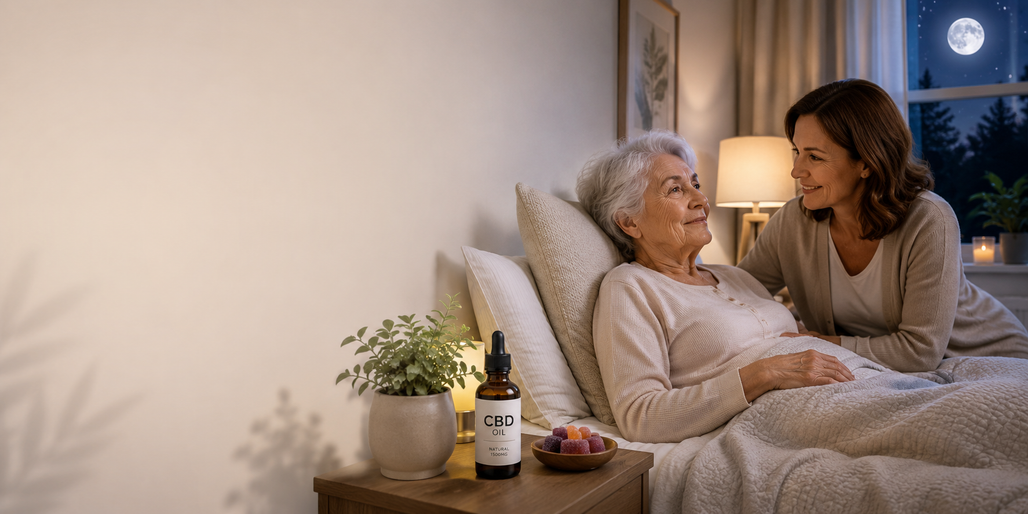
CBD for Sleep in Elderly Adults: What Seniors Should Know Before Trying It
CBD for Sleep in Elderly Adults: What Seniors Should Know Before Trying It
Many older adults experience changes in sleep patterns as they age. Difficulty falling asleep, waking up during the night, or feeling less rested in the morning are all common concerns.
Some seniors and caregivers explore CBD as part of a broader nighttime routine focused on relaxation, consistency, and comfort. Research on cannabis use in older adults from the National Institutes of Health highlights growing interest among seniors, but also emphasizes the importance of education, caution, and medical guidance.
If you are new to CBD, start with our main guide on CBD for Seniors for a full overview.
Why Sleep Changes as We Age
Sleep patterns naturally shift over time. Older adults may experience lighter sleep, more frequent waking, or changes in circadian rhythm. These changes can be influenced by:
- Medication use
- Changes in daily routine
- Stress or anxiety
- Reduced physical activity
- Health conditions
- Natural changes in sleep cycles
This is one reason many seniors begin exploring new ways to support a consistent nighttime routine.
Why Seniors Look Into CBD for Sleep
CBD is often discussed in the context of relaxation and overall wellness. While it is not a treatment for sleep disorders, some seniors explore it as part of a calming evening routine.
For many older adults, improving sleep starts with improving how they unwind before bed. A consistent routine, reduced screen time, a comfortable environment, and careful product selection can all play a role.
The CDC’s CBD overview explains that CBD is not impairing like THC, but CBD products are still not risk-free and may affect people differently.
What Research Currently Says About CBD and Sleep
Research into CBD and sleep is still developing. Scientists continue to study how cannabinoids may affect sleep patterns, relaxation, and overall wellness, but results can vary from person to person.
Because evidence is still evolving, seniors should approach CBD with realistic expectations. CBD should not be treated as a guaranteed sleep solution, and older adults should speak with a healthcare provider before starting, especially if they take medications or manage chronic conditions.
CBD Product Types for Evening Use
CBD comes in several formats, and each one may fit differently into a nighttime routine.
CBD Gummies
Full Spectrum CBD Gummies are simple and pre-measured, which can make them easier to use consistently. Because they are eaten, they may take longer to process than some other formats.
CBD Oil
CBD oil is taken under the tongue and allows flexible serving sizes, but it requires more careful measuring. Learn more in our guide on CBD Oil for Seniors.
CBD Capsules
Capsules provide a consistent serving size and may feel familiar to seniors who already use supplements. However, like gummies, they must be digested before effects are felt.
CBD Flower
CBD flower is less commonly used by seniors but may appeal to experienced users looking for faster onset. Smokable hemp is usually not the first format most beginners or caregivers consider.
Before purchasing any CBD product, seniors should review a current Certificate of Analysis. A third-party lab report can verify cannabinoid content, THC levels, and contaminant testing. You can review available CBD lab reports and COAs when comparing products.
Why THC Content Matters for Sleep
Even small amounts of THC can affect how a product feels, especially for older adults. Seniors may be more sensitive to cannabinoids, so understanding THC content is important.
- CBD isolate: Contains CBD only
- Broad-spectrum CBD: Contains multiple hemp compounds with THC removed or reduced
- Full-spectrum CBD: Contains CBD plus other hemp compounds and trace THC
For beginners, lower-THC options are often more comfortable when starting. To better understand the difference between these product types, read Full-Spectrum vs Broad-Spectrum CBD.
Start Low and Go Slow
When trying CBD for the first time, especially for nighttime use, it is important to begin with a small amount and adjust gradually. Taking too much too quickly may lead to unwanted effects such as next-day drowsiness, discomfort, or feeling less alert than expected.
Because older adults may be more sensitive to cannabinoids, it is important to pay attention to how a product affects alertness, balance, and coordination, especially during the first few uses.
If you are unsure where to begin, see our guide on CBD Dosage for Seniors for a simple breakdown of serving sizes.
Building a Simple Nighttime Routine
CBD is often most useful when combined with consistent habits. Seniors exploring CBD for sleep should also consider basic lifestyle factors that support better rest.
- Maintain a consistent bedtime
- Limit caffeine later in the day
- Create a calming pre-sleep routine
- Avoid screens before bed
- Keep the sleep environment comfortable
These factors often play just as important a role as any product.
When to Talk to a Healthcare Provider
Older adults should always be cautious when introducing new products, especially if they take medications or manage health conditions. Research on CBD and medication interactions shows that CBD can affect how certain drugs are processed.
The FDA’s cannabis and CBD guidance also notes potential concerns around side effects, drug interactions, product quality, and unproven claims.
If you have concerns about safety, side effects, or interactions, see our full guide on Is CBD Safe for Elderly Adults?.
Questions to Ask Your Doctor Before Using CBD for Sleep
- Could CBD interact with any of my medications?
- Do any of my prescriptions carry a grapefruit warning?
- Would THC be appropriate for me?
- Could CBD increase drowsiness, dizziness, or fall risk?
- Should I avoid CBD because of any existing health conditions?
- What side effects should I monitor?
- Should I use isolate, broad-spectrum, or full-spectrum CBD?
According to Harvard Health, consumers should be cautious with CBD and medications, especially when using products regularly.
Final Thoughts: CBD and Sleep in Seniors
CBD is increasingly being explored by seniors as part of a broader nighttime wellness routine. While it is not a guaranteed solution for sleep issues, it may fit into a consistent routine focused on relaxation, comfort, and balance.
For many older adults, simplicity matters most. Products like CBD gummies provide a straightforward, pre-measured option, while CBD oils offer more flexibility depending on personal preference.
To continue learning, return to our main guide on CBD for Seniors, read about CBD Oil for Seniors, or review Green Nursery’s lab reports and COAs.
Disclaimer: This content is for educational purposes only and is not medical advice. CBD may affect individuals differently and may interact with medications. Older adults should consult a qualified healthcare provider before using CBD or hemp products, especially for sleep-related concerns.
Popular Products
Check out these customer favorites.