
Gotu Kola Benefits, Uses, Tea, Dosage, and Safety
Gotu Kola Benefits, Uses, Tea, Dosage, and Safety
Gotu kola is a leafy herb traditionally used for memory, mental clarity, and skin-related concerns. Known botanically as Centella asiatica, it appears in herbal teas, supplements, and skin-care products. Human research offers some promising findings, but Memorial Sloan Kettering's overview emphasizes that evidence remains insufficient to establish it as a treatment for the conditions commonly advertised.
Understanding gotu kola starts with the form you are considering. A cup of leaf tea, a standardized extract, and a Centella cream have different uses and evidence. This guide explains those distinctions. For broader context, see our guide to herbal supplements, uses, and safety.
What is gotu kola, and where does it come from?
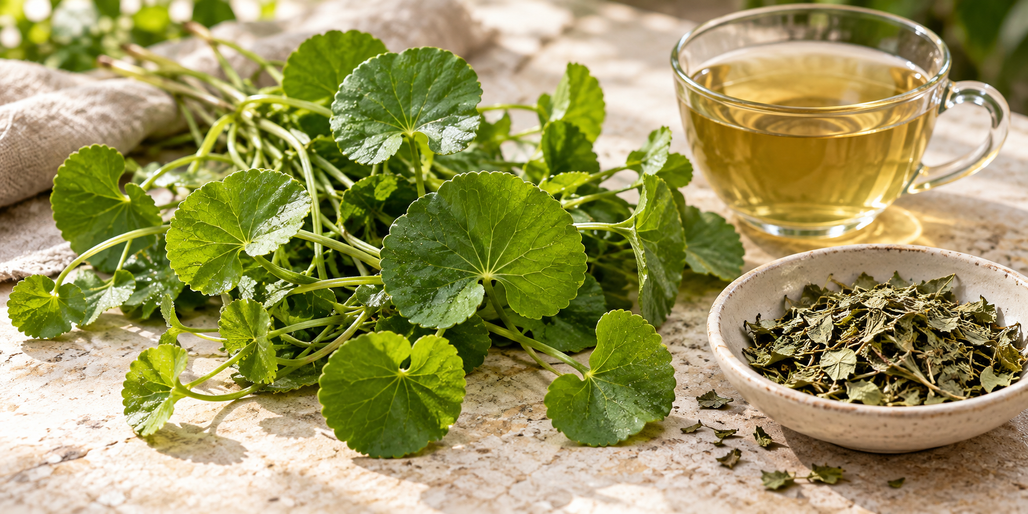
Gotu kola is a low-growing, creeping plant with rounded leaves, also called Indian pennywort and tiger grass. NIH's LiverTox reference describes its origins in tropical areas of Southeast Asia and Australia. It records centuries of use in Ayurvedic and Chinese medicine, alongside culinary uses such as vegetables and salads.
Those traditions involve different preparations and purposes. Eating the plant as food, drinking an infusion, and taking a concentrated supplement should not be treated as equivalent exposures.
In Ayurveda, the plant is known as mandukaparni and has a longstanding association with memory and mental function. That background is discussed in a published review of cognition research. It helps explain modern interest in gotu kola without establishing that every traditional claim has been confirmed clinically.
Gotu kola benefits: what does the evidence support?
The most useful question is what preparation was tested, for which problem, and in whom. Here is how three common areas of interest compare:
| Area of interest | What research suggests | What that means for readers |
|---|---|---|
| Memory and focus | A 2017 systematic review and meta-analysis found no strong evidence of improvement across cognitive domains compared with placebo. | Gotu kola is not an established memory enhancer or dementia treatment. |
| Leg swelling and venous circulation | An older trial involving 94 patients found improvements in leg heaviness and swelling with a specific triterpene extract. | This concerns diagnosed venous insufficiency and an extract, not general circulation benefits from tea. |
| Skin and wound care | Small studies of topical and oral preparations suggest possible benefits, but results vary and more research is needed. | A cream's results cannot establish what drinking dried leaf will do for skin. |
More recent research has not settled the memory question. A 2022 randomized study of 60 older adults with mild cognitive impairment compared exercise, exercise plus gotu kola extract, and a control group over 12 weeks. Exercise groups improved, but adding gotu kola did not produce an additional cognitive benefit.
These findings leave room for further research while setting realistic expectations. They do not justify replacing care for memory changes, persistent swelling, or wounds with an herbal product.
Dried leaf, extracts, and Centella skin care
Green Nursery's Gotu Kola Leaf listing identifies the botanical as Centella asiatica, the form as dried cut leaf, and the plant part as leaf or aerial portions. The listed origin is India / Sri Lanka. This is a loose botanical for preparation, rather than a standardized extract.
Capsules can contain powdered plant material or an extract, so the word “capsule” does not tell you its concentration. Liquid products require attention to both serving volume and extract strength. Skin-care products are formulated for external use and should never be swallowed.
When comparing products, look beyond the shared plant name. Identify the plant part, preparation, intended route of use, and any specified constituent content before comparing their milligram amounts or claims.
Gotu kola tea preparation and dosage
Preparing dried leaf tea
The Green Nursery product page describes steeping dried leaf in hot water and straining it. It does not currently specify a serving weight, water quantity, or steeping time. Check the package or request those directions before preparing a serving.
- Confirm the recommended amount and preparation directions for the actual product.
- Measure the leaf by weight if directions use grams. Loose teaspoons vary with leaf size and packing.
- Use the specified water quantity and steeping time, then strain the leaf.
- Follow the stated frequency and avoid increasing servings to chase a stronger effect.
Green Nursery describes the flavor as herbal, with sweet, bitter, and mildly astringent notes. Taste can help you decide whether you enjoy the tea, but bitterness does not measure its potency.
Why study doses are not tea instructions
The 2022 exercise study used 500 mg of gotu kola extract twice daily. The venous-insufficiency trial tested a different preparation, a titrated triterpene extract, at 60 or 120 mg daily.
Those numbers describe research protocols, not a recommended dose for Green Nursery's leaf. Milligrams of a selected extract cannot be converted directly into teaspoons of herb. An effective leaf-tea dose for improving memory has not been established.
Gotu kola side effects and important precautions
Gotu kola can cause unwanted effects. Cleveland Clinic describes digestive symptoms, headaches, dizziness, and drowsiness with large amounts, as well as allergic skin reactions. Stop use if symptoms develop, and do not drive if you feel impaired.
Liver injury is a rare but important concern. LiverTox reports cases of acute liver injury with jaundice associated with Centella. Avoid self-directed use if you have liver disease. Stop taking it and seek prompt medical care for yellowing of the eyes or skin, dark urine, or persistent abdominal pain.
Medication interactions are incompletely understood. Laboratory findings suggest effects on enzymes that process medicines, but their clinical significance remains uncertain. Ask a pharmacist to review your complete medication and supplement list rather than assuming that no proven interaction means no risk.
For pregnancy, breastfeeding, or use in children, obtain professional advice before use. Cleveland Clinic flags these groups for additional caution. This adult educational guide does not establish a safe dose for them.
Is gotu kola legal?
Gotu kola is sold in the United States as an herb and in supplement products. Sale does not mean a product is approved to treat memory loss, circulation disorders, or another disease. The FDA explains that dietary supplements do not receive premarket approval for safety and effectiveness.
Product classification and permissible claims depend on the formulation and intended use. For international purchases or travel, verify the destination's current import requirements. U.S. retail availability does not establish the rules elsewhere.
What to check before choosing a product
- Identity: look for Centella asiatica and a clearly named plant part.
- Preparation: distinguish dried leaf, powdered herb, extracts, and topical products.
- Directions: confirm the serving, preparation method, and intended duration.
- Suitability: consider your medicines, liver history, and reason for using it.
Frequently asked questions
Does gotu kola tea contain caffeine?
Plain gotu kola is caffeine-free. A blend may contain caffeinated ingredients, so check the complete formula rather than relying on the name on the front.
Is gotu kola the same plant used in Centella skin care?
Yes, when the ingredient is identified as Centella asiatica. However, the finished preparation matters. A serum, cream, extract capsule, and leaf tea can differ substantially in concentration and intended use.
How quickly does gotu kola work for focus?
There is no reliable onset time established for leaf tea. The studies discussed above do not demonstrate a predictable, immediate focus effect. Avoid treating a lack of noticeable sensation as a reason to take more.
Can I take gotu kola every day?
Short studies of particular preparations do not establish indefinite safety for every product. Discuss continued use with a healthcare professional, especially if you take medicines, and reassess whether it serves a clear purpose.
Popular Products
Check out these customer favorites.