
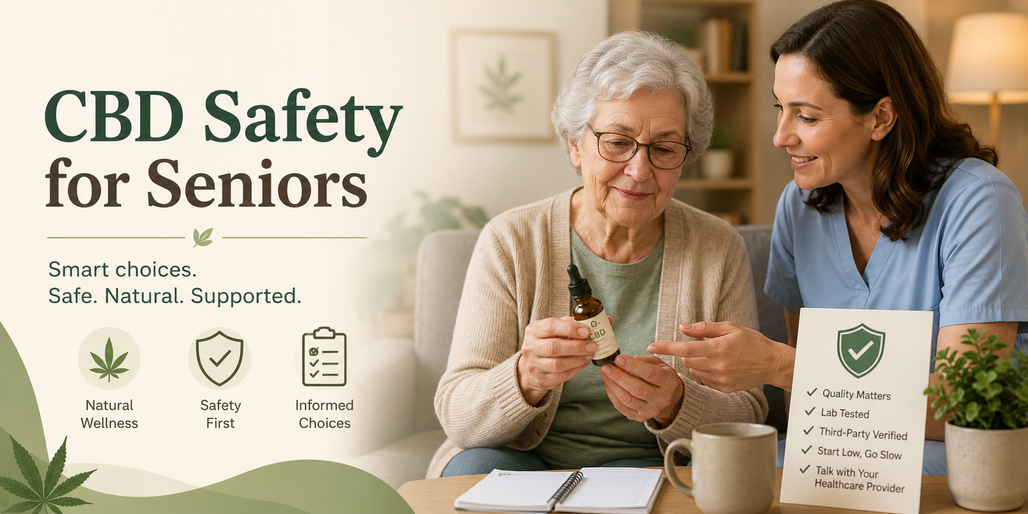
Is CBD Safe for Elderly Adults? Side Effects, Medication Concerns, and What to Ask a Doctor
Is CBD Safe for Elderly Adults? Side Effects, Medication Concerns, and What to Ask a Doctor
One of the most common questions older adults and caregivers ask is simple: is CBD safe for elderly adults? As interest in CBD continues to grow, so do concerns about side effects, medication interactions, THC exposure, and whether CBD is appropriate for seniors.
CBD may be well tolerated by many adults, but that does not mean it is risk-free. Older adults often take more medications, may be more sensitive to cannabinoids, and may need extra caution when trying any new hemp product.
If you are new to CBD, start with our main guide on CBD for Seniors to understand the basics before diving into safety considerations.
Is CBD Generally Safe for Seniors?
CBD is generally described as non-intoxicating, meaning it does not produce the traditional high associated with THC. The CDC's CBD overview explains that CBD is not impairing, but also notes that scientists are still learning how CBD affects the body and that CBD products are not risk-free.
For seniors, the safest approach is to treat CBD like any other supplement or wellness product: start cautiously, read labels carefully, and talk with a healthcare provider first.
Why Seniors Should Talk to a Doctor First
Before trying CBD, older adults should speak with a healthcare provider. This is especially important for anyone taking prescription medications, managing chronic conditions, or using products that may affect sleep, mood, blood pressure, or alertness.
Research on CBD adverse effects and drug interactions explains that CBD can affect how the body processes certain medications. Harvard Health also recommends caution with CBD and medications, especially because CBD may interact with drugs processed by the liver.
A doctor or pharmacist can help determine whether CBD is appropriate, whether medication interactions are a concern, and what warning signs to watch for.
Possible Side Effects of CBD in Elderly Adults
While many people tolerate CBD well, some seniors may experience side effects. These are often mild, but they matter more for older adults because drowsiness, dizziness, or medication interactions may increase safety risks.
- Tiredness or drowsiness
- Dry mouth
- Digestive discomfort
- Changes in appetite
- Lightheadedness
- Increased sensitivity to cannabinoids
The FDA's CBD consumer guidance notes potential CBD risks, including side effects, drug interactions, and concerns with product quality.
CBD and Medication Concerns for Seniors
Medication interaction is one of the most important CBD safety concerns for elderly adults. Many seniors take multiple prescriptions, and CBD may affect liver enzymes involved in drug metabolism.
This concern may apply to several product types, including CBD oils, capsules, gummies, and full-spectrum hemp products. Even consistent products like full-spectrum CBD gummies still deliver cannabinoids into the body.
The NCBI LiverTox summary on cannabidiol explains that higher CBD doses have been associated with liver enzyme elevations in some clinical contexts, which is another reason seniors should involve a healthcare provider before starting CBD.
Does THC Matter for Seniors?
Yes. THC content matters significantly for older adults. Even small amounts of THC may feel stronger for seniors who are sensitive, new to cannabis products, or taking other medications.
CBD products generally fall into three categories:
- CBD isolate: Contains CBD only
- Broad-spectrum CBD: Contains multiple hemp compounds with THC removed or reduced
- Full-spectrum CBD: Contains CBD plus other hemp compounds and trace THC
For seniors and beginners, lower-THC options are often easier to approach. Understanding the label, cannabinoid profile, and serving size is important before choosing a product.
How to Read Lab Reports and COAs
One of the best ways to evaluate CBD product quality is by reviewing a Certificate of Analysis, often called a COA. This third-party lab report shows what is in the product and can help verify label accuracy.
- CBD levels
- THC levels
- Batch information
- Contaminant testing, such as pesticides or heavy metals
- Testing date
Green Nursery provides product testing through its COA and lab reports page, which can help seniors and caregivers compare products more confidently.
Red Flags When Shopping for CBD Products
Not all CBD products are created equal. Seniors and caregivers should watch for warning signs when choosing products.
- No third-party lab testing available
- Unrealistic health claims
- Unclear ingredient lists
- No transparency about THC content
- No batch-specific COA
- Confusing serving-size information
The FDA has raised concerns about CBD products marketed with unproven claims and unknown quality. For older adults, transparency is especially important because product quality, dose, and THC content can affect comfort and safety.
Choosing the Right Type of CBD Product
Seniors often compare different product types when deciding what feels safest and easiest to use. Some prefer pre-measured formats, while others want flexible serving sizes.
CBD gummies can be convenient because they are pre-measured. CBD oils may allow more flexible serving control. If you want a deeper breakdown of ingestible formats, see our guide on CBD oil for seniors.
Some experienced users may explore CBD flower, but smokable hemp is usually not the first format most beginners or caregivers consider.
Questions Seniors Should Ask a Doctor Before Trying CBD
A short conversation with a healthcare provider can make CBD use safer and less confusing. Helpful questions include:
- Could CBD interact with any of my current medications?
- Do any of my prescriptions carry a grapefruit warning?
- Is CBD appropriate with my health conditions?
- Could CBD increase drowsiness, dizziness, or fall risk?
- Should I avoid THC or full-spectrum CBD?
- What side effects should I watch for?
- Should liver function or other health markers be monitored?
CBD and Sleep, Comfort, and Daily Use
Many seniors explore CBD as part of a daily routine, including relaxation or nighttime use. Consistency and simplicity can matter more than product strength.
Older adults should avoid assuming that more CBD is automatically better. A smaller serving from a clearly labeled, lab-tested product is usually a better starting point than a stronger product with unclear testing.
Caregiver Tips: Helping an Elderly Adult Use CBD Safely
If you are helping a parent or loved one, safety and simplicity should come first.
- Encourage medical consultation before starting
- Choose clearly labeled, lab-tested products
- Start with small amounts
- Track responses over time
- Avoid combining CBD with alcohol or sedating medications unless a doctor approves
- Keep product labels and COAs available for review
The goal is not to rush, but to create a cautious, informed experience.
Final Thoughts: Is CBD Safe for Elderly Adults?
CBD may be well tolerated by many people, but for seniors, safety comes down to medical guidance, product quality, THC awareness, and careful serving size.
Older adults and caregivers should pay special attention to side effects, medication interactions, lab reports, and THC content before choosing a product.
To continue learning, return to our main guide on CBD for Seniors, compare available CBD gummies, or review Green Nursery's lab reports and COAs.
Disclaimer: This content is for educational purposes only and is not medical advice. CBD may interact with medications and may not be appropriate for everyone. Older adults should consult a qualified healthcare provider before using CBD or hemp products.
Popular Products
Check out these customer favorites.