
No PGR Weed - Natural CBD Flower
PGR Weed vs Natural CBD Flower: What Plant Growth Regulators Mean for Hemp Quality
Not all hemp flower is grown the same way. Some flower is cultivated with careful genetics, proper drying, clean curing, and transparent lab testing. Other flower may be pushed for size, density, or appearance using plant growth regulators, often called PGRs.
At Green Nursery, we focus on natural, lab-tested hemp flower and avoid sourcing CBD flower from growers using questionable synthetic PGR practices. If you are shopping for clean, transparent flower, start with our lab-tested hemp flower collection, review current COAs and lab reports, or compare customer feedback on our reviews page.
This guide explains what PGR weed is, why some growers use PGRs, how PGR-treated flower may differ from naturally grown hemp flower, and why lab testing, transparency, and cultivation standards matter.
What Is PGR Weed?
PGR weed refers to cannabis or hemp flower grown with plant growth regulators. Plant growth regulators are substances that influence plant development, including height, branching, flowering, and overall structure.
The important detail is that not all plant growth regulators are the same. Some growth-regulating compounds occur naturally in plants, while certain synthetic PGRs have raised concerns when used to manipulate cannabis flower appearance, density, and yield.
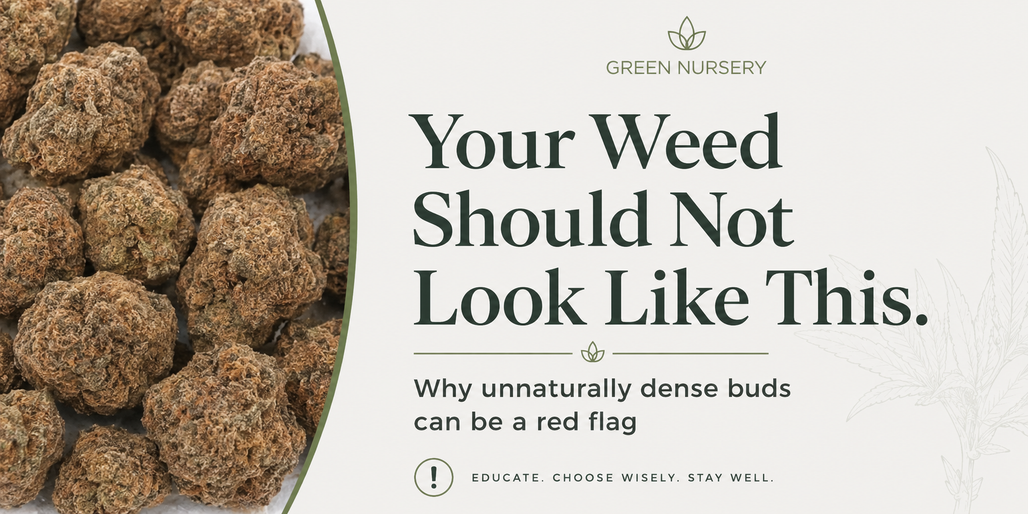
In everyday cannabis conversations, “PGR weed” usually refers to flower suspected of being grown with synthetic growth regulators to create unusually dense, heavy, uniform-looking buds.
Why Some Growers Use Plant Growth Regulators
Some commercial growers may use PGRs because they can influence plant size, flowering behavior, and yield. In ornamental agriculture, turf management, and other crop systems, plant growth regulators may be used for specific agricultural purposes.
In cannabis or hemp flower, the concern is different. Consumers are often inhaling or otherwise consuming the final flower. That makes cultivation inputs, residue concerns, drying practices, and product transparency especially important.
| Why PGRs May Be Used | Why Consumers Should Care |
|---|---|
| Increase bud density | Unnaturally hard buds may not reflect better flower quality. |
| Improve visual uniformity | Appearance can be misleading without lab testing. |
| Increase yield | Yield-focused cultivation may come at the expense of aroma, texture, and transparency. |
| Control plant structure | Consumers may not know what was used unless the company is transparent. |
PGR Weed vs Natural Hemp Flower
Natural hemp flower should be evaluated by freshness, aroma, cannabinoid content, terpene profile, texture, trim quality, and lab testing. PGR-treated flower is often discussed because it may look dense or “perfect” while lacking the aroma, texture, and terpene expression consumers expect from properly grown flower.
| Feature | Natural CBD Flower | Possible PGR-Treated Flower |
|---|---|---|
| Bud structure | Natural variation in shape and density | Unusually hard, dense, or uniform |
| Aroma | Noticeable strain-specific scent | May smell muted, grassy, or flat |
| Texture | Slightly springy when properly cured | May feel overly compact or dry |
| Appearance | Varies by genetics, grow, and cure | May look artificially swollen or overly dense |
| Quality proof | Supported by COAs and transparent sourcing | Often difficult to verify without trustworthy sourcing |
Why PGRs Are Controversial in Cannabis and Hemp
PGRs are controversial because cannabis and hemp flower are not ordinary ornamental plants. The final product may be smoked, vaped, infused, or otherwise consumed. That raises different questions than using growth regulators on decorative plants or non-consumed crops.
Consumers are especially concerned about whether synthetic PGR residues, unknown cultivation inputs, or poor quality controls could affect the final product. The CDC notes that products labeled as hemp or CBD may contain THC, pesticides, heavy metals, bacteria, or fungi, which is one reason transparent testing matters in the hemp marketplace.
The FDA also warns that many non-prescription CBD products have not been FDA-approved and may raise quality, safety, labeling, or contaminant concerns. That does not mean every hemp product is unsafe. It means consumers should choose companies that publish testing and avoid unsupported claims.
Can You Identify PGR Weed by Looking at It?
Sometimes consumers suspect PGR-treated flower because of appearance, but visual inspection is not proof. Buds can be dense because of genetics, indoor growing, trimming style, drying, curing, or compression during storage and shipping.
Possible warning signs may include:
- Extremely hard or rock-like buds
- Very uniform, swollen-looking flower
- Muted aroma despite dense appearance
- Harsh smell or chemical-like scent
- Excessive orange pistils with little visible complexity
- Little strain-specific terpene character
These signs are not definitive. The better approach is to buy from transparent companies, review lab reports, and avoid flower with unclear sourcing.
How PGRs Can Affect Flower Quality
Consumers usually choose hemp flower for its natural cannabinoid and terpene profile. A good strain should have a recognizable aroma, proper moisture, clean trim, and a COA that supports its label.
Flower grown primarily for density and weight may disappoint shoppers if it lacks:
- Strong strain-specific aroma
- Fresh terpene expression
- Balanced moisture
- Clean texture when broken apart
- Transparent lab documentation
Research on cannabis chemistry highlights the importance of cannabinoids and terpenoids in the plant’s overall profile. The NCBI article Taming THC: potential cannabis synergy and phytocannabinoid-terpenoid entourage effects provides useful background on cannabinoids, terpenoids, and why flower chemistry matters.
Why COAs Matter More Than Appearance
A Certificate of Analysis, or COA, is one of the most useful tools for evaluating hemp flower. A COA can help confirm cannabinoid content, THC levels, batch identity, and sometimes terpene or contaminant testing.
USDA’s hemp laboratory testing guidelines explain why cannabinoid testing matters for hemp compliance. The USDA Domestic Hemp Production Program also provides broader federal hemp production context.
When reviewing a hemp flower COA, look for:
- Product or strain name
- Batch or lot number
- Testing date
- CBD and CBDA levels
- Delta-9 THC
- THCA and total THC, when available
- Terpene profile, if included
- Contaminant testing, when available
Green Nursery customers can review current COAs and lab reports before buying. For more help, read How to Read a CBD Flower Lab Report and Why Third-Party Testing Matters for CBD and Hemp Products.
What Green Nursery Looks for in Natural CBD Flower
Green Nursery prioritizes hemp flower that is naturally expressive, properly tested, and clearly documented. Instead of chasing unnaturally dense flower, we look for balanced quality indicators that actually matter to consumers.
| Quality Indicator | Why It Matters |
|---|---|
| Batch-specific testing | Helps verify cannabinoid content and THC compliance. |
| Fresh aroma | Suggests better terpene retention and proper storage. |
| Natural bud structure | Reflects genetics, cultivation, and curing rather than artificial appearance. |
| Proper moisture | Helps preserve texture and usability. |
| Transparent sourcing | Builds confidence in cultivation and quality practices. |
Explore our premium CBD flower collection, including strain-specific options like Bubba Kush CBD flower, Purple Hindu Kush CBD flower, and Sour Suver Haze CBD flower.
Common Myths About PGR Weed
Myth: All dense buds are PGR weed.
Not true. Some strains naturally grow dense flowers. Indoor cultivation, genetics, drying, curing, and trimming can all affect density.
Myth: You can always identify PGR weed by sight.
Not reliably. Appearance can raise questions, but testing, sourcing, and cultivation transparency matter more.
Myth: Natural hemp flower should look loose or low-quality.
Also false. Natural hemp flower can be dense, aromatic, colorful, and visually appealing without questionable synthetic PGR practices.
Myth: A strain name proves quality.
A strain name is only a starting point. The actual batch, COA, freshness, and cultivation standards matter more.
How to Avoid Questionable Hemp Flower
Before buying CBD flower, ask practical questions:
- Does the company publish COAs?
- Does the flower have a clear strain name and batch identity?
- Are cannabinoid results easy to find?
- Does the product have customer reviews?
- Does the flower description explain aroma, texture, and testing?
- Does the company avoid unrealistic health or quality claims?
You can also visit Green Nursery’s customer reviews and FAQ page for more shopping guidance.
Frequently Asked Questions About PGR Weed
What does PGR weed mean?
PGR weed usually refers to cannabis or hemp flower suspected of being grown with synthetic plant growth regulators to increase density, uniformity, or yield.
Are all plant growth regulators dangerous?
No. Plant growth regulation is a broad agricultural topic, and some growth-regulating compounds occur naturally. Consumer concern usually focuses on questionable synthetic PGR use in flower intended for inhalation or consumption.
How can you tell if weed has PGRs?
You cannot confirm PGR use by sight alone. Very hard, dense, low-aroma buds may raise questions, but sourcing transparency, testing, and company standards are more reliable indicators.
Is PGR weed the same as natural CBD flower?
No. Natural CBD flower is grown without questionable synthetic PGR practices and should be evaluated by COAs, aroma, freshness, terpene profile, and transparent sourcing.
Does Green Nursery sell PGR-grown CBD flower?
Green Nursery focuses on natural, lab-tested CBD flower and avoids sourcing flower from growers using questionable synthetic PGR practices.
Why do COAs matter for PGR concerns?
A COA may not always test specifically for every possible PGR, but it helps verify cannabinoid content, THC compliance, batch identity, and contaminant screening when included.
Can CBD flower contain contaminants?
Yes, poorly controlled hemp or CBD products may contain unwanted contaminants. That is why third-party testing, sourcing transparency, and reputable sellers matter.
Final Takeaway
PGR weed is controversial because it raises questions about cultivation shortcuts, flower quality, consumer transparency, and what was used during the growing process.
The safest shopping approach is to avoid flower that relies only on appearance. Choose hemp flower with clear sourcing, strong aroma, natural structure, current COAs, and transparent company practices.
To shop naturally grown, lab-tested hemp flower, browse Green Nursery’s CBD flower collection, review current COAs and lab reports, and compare real customer feedback on our reviews page.
Disclaimer: This article is for educational purposes only and is not medical, agricultural, or legal advice. Hemp flower quality can vary by genetics, cultivation method, harvest, cure, storage, and testing scope.
Popular Products
Check out these customer favorites.