
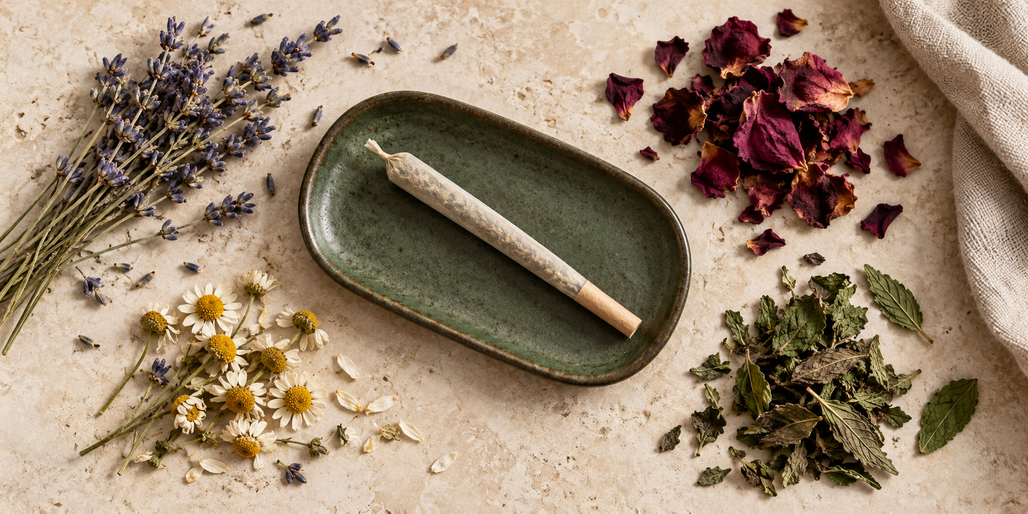
Smoking Herbs With Weed: Effects, Evidence, and Risks
Smoking Herbs With Weed: Reported Effects, Evidence, and Risks
Smoking herbs with weed can change a joint’s aroma and flavor, but research does not provide a reliable way to choose an herb that makes the high calmer, clearer, or more euphoric. Lavender, rose petals, chamomile, mullein, damiana, and peppermint appear in herbal smoking blends, yet the evidence discussed below largely concerns other preparations or uses.
A different-tasting joint and a predictably different cannabis effect are separate claims. Understanding that distinction helps explain why a blend can sound convincing without having been tested for the experience it promises.
For the wider context on botanical ingredients and preparation methods, start with our guide to herbal supplements, uses, and safety. Here, the focus is specifically on combining herbs with cannabis in joints.
Why people mix herbs with cannabis
Interest in herbs to mix with weed usually involves flavor, a familiar ritual, replacing tobacco, or hoping for a different experience. Those goals deserve different questions. A floral scent can be described without proving that the ingredient treats anxiety or changes THC’s effects.
It also matters whether the amount of cannabis changes. Replacing some cannabis with another herb reduces the cannabis present in an otherwise comparable joint. Adding an herb while keeping the original amount of cannabis does not remove any of that cannabis. Neither situation establishes the amount of THC someone actually inhales.
This creates a basic interpretation problem: if a blend feels different, was that because of the added herb, a different amount of cannabis, or another change in the session? A personal report cannot separate those possibilities by itself.
For hemp and cannabis flower, check the actual cannabinoid information rather than relying on a product name. Our guide to reading a CBD flower lab report explains how to interpret the accompanying test results.
Six herbs mixed with weed: reported effects and evidence
The table below separates reasons people discuss these ingredients from what the cited research can establish. The reported effects are claims to evaluate, not promised outcomes.
| Herb | Reported reason for adding it | Relevant evidence | Main limitation |
|---|---|---|---|
| Lavender | Floral aroma and hoped-for relaxation | Research includes specific oral oil products and aromatherapy. | Those findings do not establish a calmer high from smoked lavender. |
| Rose petals | Floral character, ritual, and a mellow experience | Some trials examine rose essential oil aromatherapy. | Smelling an oil differs from burning petals with cannabis. |
| Chamomile | A bedtime association and hoped-for relaxation | Clinical evidence is limited and preparation-specific. | Tea or supplement findings do not demonstrate a sleep-promoting joint. |
| Mullein | A base ingredient and claims of a smoother smoke | European guidance concerns traditional mullein flower medicines. | That assessment does not establish benefits from smoking mullein leaves. |
| Damiana | Claims of relaxation, sensuality, or euphoria | Extract research includes animal experiments. | Animal findings cannot predict a human cannabis-smoking experience. |
| Peppermint | Mint flavor and a fresh sensory impression | Much of the clinical research concerns peppermint oil preparations. | It does not establish improved focus or breathing from smoked leaf. |
None of these evidence summaries provides a validated recipe for selecting a particular cannabis effect. The preparation and outcome tested matter as much as the plant’s name.
Lavender: the relaxation association needs context
Lavender’s reputation makes it an obvious ingredient to investigate when someone wants a calmer experience. According to NCCIH’s lavender summary, some studies suggest anxiety benefits from specific swallowed lavender oil products, but the research has limitations. Benefits from aromatherapy remain unclear.
That leaves a substantial gap between the research and a joint containing dried flowers. A pleasant lavender scent does not demonstrate that the blend will prevent THC-related anxiety or reliably promote sleep.
Rose petals: distinguish a floral experience from a treatment claim
Rose research illustrates why even an appealing botanical needs careful interpretation. A 2024 trial involving emergency orthopedic surgery patients reported reduced anxiety with rose aromatherapy. A 2019 trial involving heart surgery patients did not find a significant anxiety benefit.
The studies involved different clinical situations, and neither tested rose petals burned with cannabis. They cannot substantiate claims that a rose joint produces a particular mood or therapeutic effect.
Chamomile: a familiar tea does not establish smoking effects
Chamomile is strongly associated with winding down, but familiarity can make its evidence seem stronger than it is. NCCIH reports that reliable evidence remains insufficient for many claimed uses, with very limited information on insomnia.
Chamomile can also cause allergic reactions, particularly in people sensitive to ragweed and related plants. Both the evidence and the cautions deserve attention before its bedtime reputation is used to market a cannabis blend.
Mullein: traditional throat remedies are not lung-cleaning smoke
Mullein is sometimes discussed as though its traditional respiratory uses make smoking it beneficial. The European Medicines Agency’s assessment concerns mullein flower medicines for sore throat associated with dry cough and cold. Its conclusions rest on long-standing use, with insufficient clinical trial evidence.
That assessment does not validate smoking mullein leaves, cleaning the lungs, or protecting against cannabis smoke. The plant part, preparation, and route all differ from the claim being made.
Damiana: animal findings do not predict a stronger high
Damiana’s reputation includes sensuality and relaxation. One study of a damiana extract in male rats found effects on sexual behavior and an anxiety-related behavioral measure.
That is a reason for further research, but it does not establish an aphrodisiac or euphoric effect in people smoking damiana with weed. An extract experiment in animals cannot tell a reader what a dried-leaf cannabis blend will feel like.
Peppermint: minty flavor is not evidence of clearer thinking
Peppermint’s familiar scent can make descriptions such as “fresh” sound like promises of alertness or easier breathing. Those are different claims. NCCIH’s peppermint review describes research concentrated largely on oil preparations, including enteric-coated capsules for irritable bowel syndrome, and notes how little research concerns peppermint leaf.
Those findings do not establish that smoking peppermint improves concentration, opens the airways, or counteracts cannabis impairment.
Can terpenes change THC’s effects?
There is a real research question behind some blend claims. A 2024 controlled trial of vaporized THC and D-limonene involved 20 healthy adults who intermittently used cannabis. Twelve participants also completed a session with the highest tested combination.
At that combination, participants reported less anxiety and paranoia than with the same THC dose alone. Other measured THC effects were unchanged. This was a specific finding from a small study, rather than evidence that limonene removes intoxication or impairment.
The researchers administered measured amounts of isolated compounds through vaporization. They did not burn lavender, mint, citrus peel, or another whole herb in a joint. The study therefore supports further investigation of particular interactions, but it does not validate homemade herbal blends or adding essential oils to cannabis.
Herbal supplements, teas, and smoking blends are different preparations
The phrase “mixing herbal supplements with weed” can blur an important distinction. A supplement capsule, a tea ingredient, an essential oil, and dried plant material are different products. Sharing a botanical name does not make them interchangeable.
The NIH Office of Dietary Supplements explains that supplement labels can list fillers, binders, and flavorings alongside active ingredients. Information about an oral serving does not establish suitability for combustion and inhalation.
Do not treat capsule contents, supplement powders, tinctures, or essential oils as joint additives. Likewise, a food-grade or tea label describes an intended use; it does not demonstrate smoking safety. A study of an extract also cannot supply a smoking dose for the whole plant.
Smoking risks remain when the ingredients are herbal
The CDC’s cannabis and lung-health guidance states that cannabis smoke contains many of the same toxins, irritants, and carcinogens as tobacco smoke. Smoking cannabis is associated with bronchitis, cough, and increased mucus production.
Removing tobacco addresses one ingredient, but combustion remains. The NCI’s explanation of herbal cigarettes makes clear that tobacco-free herbal smoke still contains harmful chemicals. A pleasant flavor or less harsh sensation is not a measurement of those chemicals.
There is also the question of interactions. The NIH supplement safety guidance notes that botanical ingredients can have strong biological effects and interact with medicines. It does not establish how a particular smoked cannabis blend will behave. If you take medication, a pharmacist or clinician needs the exact ingredients and proposed route to assess the question meaningfully.
How to evaluate an herbal smoking blend’s claims
Before accepting a description such as “calming,” “uplifting,” or “lung-supporting,” check what actually supports it:
- Identify the material. Look for the botanical name, plant part, and full ingredient list.
- Identify the promised outcome. Flavor, relaxation, sleep, and relief from anxiety are different claims.
- Match the preparation. Check whether the cited study used tea, an extract, aromatherapy, vaporized compounds, or smoke.
- Match the participants. An animal experiment or a trial in surgical patients may not answer a question about recreational cannabis use.
- Check what was tested. Our explanation of why third-party testing matters for CBD and hemp products helps distinguish product verification from marketing claims.
- Keep the conclusion proportional. An ingredient test does not prove that burning the finished blend is safe or produces its advertised effect.
If the evidence never reaches the actual combination and route, the advertised experience remains uncertain.
Frequently asked questions
Does adding herbs make weed stronger?
The research discussed here does not establish a reliable way to make weed stronger by adding these herbs. A changed flavor or subjective experience does not demonstrate increased THC potency. The amount and composition of the cannabis still need to be considered separately.
Can lavender change your high?
A lavender-containing joint may have a different sensory character, but evidence does not establish a predictable change in the high. Lavender research on oral preparations and aromatherapy cannot show that smoking its flowers prevents cannabis-related anxiety.
Is smoking chamomile the same as drinking chamomile tea?
No. Tea and smoke are different exposures, so evidence about drinking chamomile does not establish the effects or safety of inhaling its combustion products. NCCIH’s chamomile guidance also identifies allergy concerns that its familiar tea reputation can obscure.
Does smoking mullein clean your lungs?
The evidence cited here does not support that claim. The EMA’s mullein assessment concerns traditional flower medicines for throat symptoms, not inhaled leaf smoke or removal of smoke-related lung damage.
Can you put herbal supplement powders or essential oils in a joint?
Do not use them as joint additives. An oral supplement label or aromatherapy use does not establish safety when burned and inhaled. The NIH supplement overview also explains why the complete formulation, including other ingredients, matters.
Are tobacco-free herbal joints safe?
Tobacco-free does not mean safe to inhale. The National Cancer Institute identifies tar, carbon monoxide, and other harmful substances in herbal cigarette smoke. Removing tobacco does not remove the consequences of burning plant material.
Does using CBD hemp flower remove the smoking risk?
No. A different cannabinoid profile does not make combustion harmless. The CDC’s lung-health guidance addresses harm from smoked cannabis. Product naming alone cannot establish either a predictable experience or protection from smoke exposure.
Is there a proven herb-to-cannabis ratio for relaxation?
The cited research does not establish one. A ratio from a recipe or product description should not be presented as a clinically validated dose. There is also no basis in these sources for calling a particular ratio safe to smoke.
Popular Products
Check out these customer favorites.