
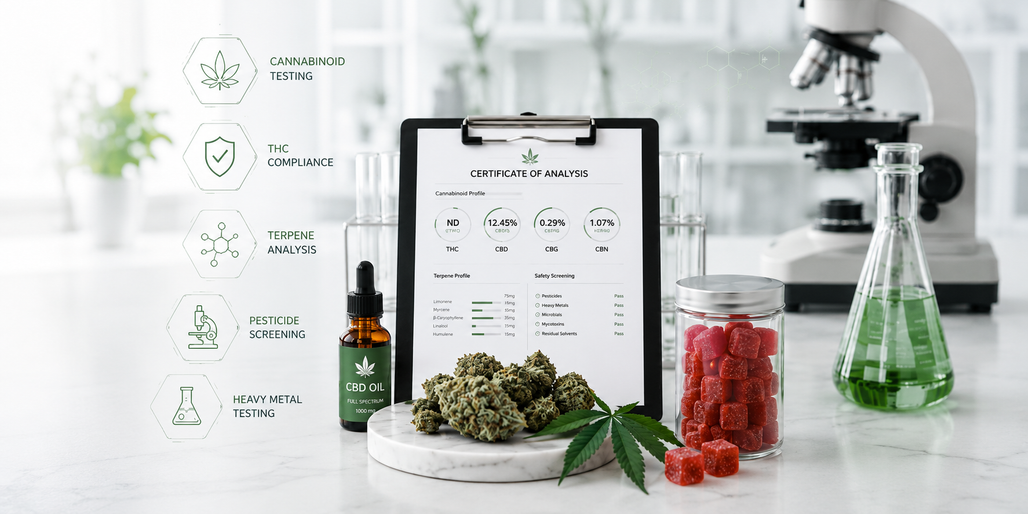
Why Third-Party Testing Matters for CBD and Hemp Products
Why Third-Party Testing Matters for CBD and Hemp Products
Third-party testing helps verify what is actually in a CBD or hemp product. A label can make claims, but an independent lab report gives shoppers a clearer way to review cannabinoid content, THC levels, terpene data, batch identity, and contaminant screening.
For a full walkthrough of lab report sections, start with our hub guide: How to Read a CBD Flower Lab Report. You can also review Green Nursery’s COAs and lab reports before making product decisions.
What Is Third-Party Testing?
Third-party testing means a CBD or hemp product is tested by an independent laboratory rather than only by the company selling it. This supports transparency and gives consumers a better way to compare products beyond marketing language.
The FDA’s CBD consumer guidance explains that CBD products can raise quality, safety, and labeling concerns. Independent testing helps consumers review what is actually reported for a specific product or batch.
What Is a Certificate of Analysis?
A Certificate of Analysis, often called a COA, is a lab report tied to a specific product or batch. It can show cannabinoid levels, THC results, terpene data, and contaminant screening.
For CBD flower shoppers, a COA is more useful than a strain name alone. Learn how to interpret one in our guide to reading a CBD flower lab report.
What Information Does a COA Contain?
Cannabinoid Profile
Cannabinoid testing shows how much CBD, CBDA, Delta-9 THC, THCA, CBG, CBC, and other cannabinoids are present. This helps verify whether the product matches its label and gives shoppers a clearer picture of potency.
| Cannabinoid | What It Tells You |
|---|---|
| CBD | Main cannabinoid in many hemp products. |
| CBDA | Natural acidic precursor to CBD. |
| Delta-9 THC | Key cannabinoid used in federal hemp compliance. |
| THCA | Acidic cannabinoid that can convert into THC when heated. |
| CBG | Minor cannabinoid sometimes found in hemp products. |
THC Content
THC testing is especially important for hemp compliance. The USDA Domestic Hemp Production Program explains the federal hemp framework, including THC compliance requirements.
COAs may show Delta-9 THC, THCA, and total THC. Always review the full report instead of relying only on product descriptions.
Terpene Analysis
Terpenes are aromatic compounds that shape smell and flavor. Common hemp terpenes include myrcene, limonene, pinene, caryophyllene, and linalool. For more background, read our guide to CBD flower terpenes.
Scientific research, including this NCBI review on cannabis terpenes, explains why terpene profiles matter for cannabis and hemp aroma.
Contaminant Testing
Contaminant testing may include heavy metals, pesticides, microbes, residual solvents, and moisture. The NIST cannabis laboratory quality assurance program highlights why reliable measurement matters in cannabis and hemp testing.
Heavy Metal Testing
Hemp can absorb substances from soil, so labs often screen for lead, arsenic, cadmium, and mercury. A preferred result is usually “Not Detected” or below the applicable action limit.
Pesticide Testing
Pesticide testing helps confirm that a product does not contain unsafe levels of agricultural chemicals. Results are usually compared against action limits.
Residual Solvent Testing
Residual solvent testing is most relevant for extracts, tinctures, concentrates, gummies, and vape products made through extraction.
Microbial Testing
Microbial testing checks for contaminants such as mold, yeast, Salmonella, E. coli, and Aspergillus. This is especially important for smokable hemp flower.
Why Third-Party Testing Matters for CBD Flower Shoppers
Third-party testing helps shoppers compare products based on verified data instead of marketing language. A current COA can show whether the product matches its label, whether THC levels are within the expected range, and whether contaminant screening was performed.
If you are new to lab reports, read How to Read a CBD Flower Lab Report. For common warning signs, review Red Flags on a CBD Flower COA.
What Are Red Flags on a CBD COA?
- Missing batch number
- Outdated testing date
- No cannabinoid breakdown
- No contaminant screening
- Results that do not match the label
- Reports that are hard to verify
How to Compare CBD Products Using Lab Reports
| What to Compare | Why It Matters |
|---|---|
| CBD and CBDA | Shows cannabinoid potency. |
| Delta-9 THC | Helps evaluate hemp compliance. |
| THCA | Adds cannabinoid context. |
| Terpenes | Helps compare aroma and flavor. |
| Testing Date | Shows whether the report is current. |
| Contaminants | Supports product quality review. |
Why Accredited Laboratories Matter
Lab quality matters because testing results influence safety, compliance, labeling, and consumer trust. Programs such as AOAC cannabis analytical science resources and NIST’s cannabis testing work support better consistency across cannabis and hemp laboratories.
Where to Find CBD Product Lab Reports
Reputable hemp companies usually make COAs available through product pages, QR codes, packaging, or dedicated testing pages. Green Nursery publishes testing information through its COA and lab testing page.
Final Takeaway
Third-party testing is one of the most important tools available to CBD and hemp consumers. It helps verify cannabinoid content, THC levels, terpene profiles, batch identity, and contaminant screening.
To keep learning, start with How to Read a CBD Flower Lab Report, review Green Nursery’s COA library, and read our guide to common CBD flower COA red flags.
Popular Products
Check out these customer favorites.