
Red Flags on a CBD Flower COA: Warning Signs Every Consumer Should Know
Red Flags on a CBD Flower COA: Warning Signs Every Consumer Should Know
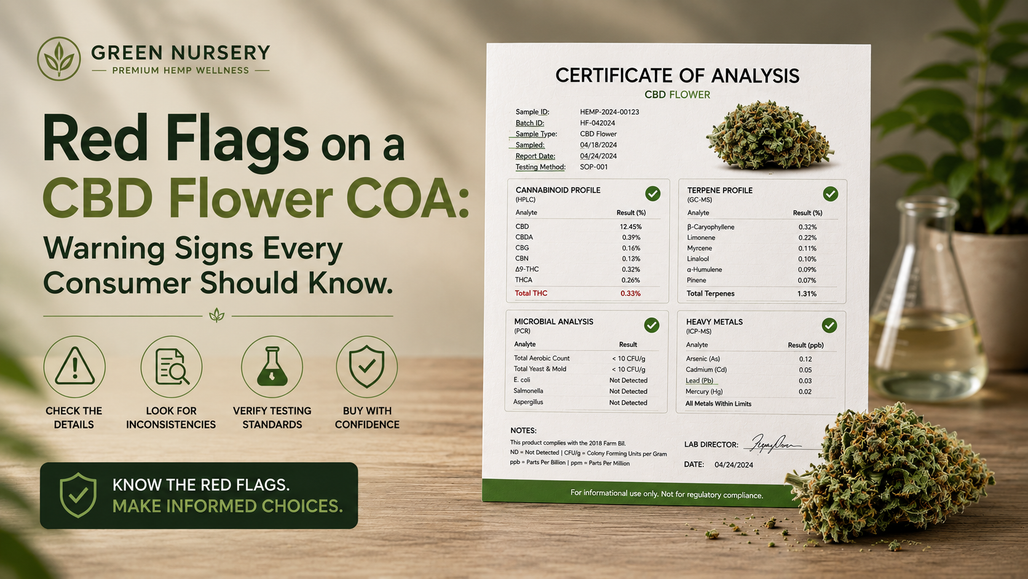
A CBD flower Certificate of Analysis, often called a COA, is one of the most useful tools consumers have when comparing hemp flower products. A good COA can help verify cannabinoid content, THC compliance, terpene data, batch information, and contaminant screening. However, not every lab report is equally helpful.
This article is part of our CBD lab testing education series. For the full parent guide, start with How to Read a CBD Flower Lab Report. For broader testing context, read Why Third-Party Testing Matters for CBD and Hemp Products.
Some CBD COA red flags are easy to miss. A report may look official at first glance but still be outdated, incomplete, unrelated to the product batch, missing contaminant testing, or unclear about THC results.
What Is a CBD Flower COA?
A CBD flower COA is a laboratory report that shows testing results for a specific hemp flower product or batch. The report is usually prepared by an independent laboratory and may include cannabinoid testing, THC results, terpene analysis, heavy metal testing, pesticide screening, microbial testing, and other quality information.
The purpose of a COA is simple: it gives shoppers data instead of relying only on marketing claims.
The FDA’s cannabis and CBD guidance explains that cannabis-derived products can vary in formulation, labeling, and intended use.
Why COAs Matter for Consumers
CBD flower can look and smell like traditional cannabis, but appearance and aroma cannot confirm potency, THC compliance, terpene profile, or product safety. A COA gives consumers a more objective way to evaluate hemp flower quality.
- Does the product contain the CBD level advertised?
- Is Delta-9 THC within the expected hemp compliance range?
- Does the report include THCA or total THC information?
- Are terpenes listed for strain comparison?
- Was the product screened for pesticides and heavy metals?
- Does the batch number match the product being sold?
- Is the testing recent?
Green Nursery publishes available COAs and lab reports so customers can review testing information.
Red Flag #1: Missing Batch or Lot Numbers
One of the biggest red flags on a CBD flower COA is a missing batch number or lot number. A lab report should connect clearly to the product being reviewed. Without a batch number, it is difficult to know whether the COA belongs to the flower being discussed.
- Product name
- Batch or lot number
- Sample ID
- Testing date
- Laboratory name
- Results connected to that specific sample
Red Flag #2: Outdated Testing Results
An outdated COA is another warning sign. Hemp flower can change over time depending on storage, packaging, moisture, light exposure, and age. A report from several years ago may not tell you much about the current product being reviewed.
- The report is from a different year
- The batch number is missing
- The product page does not identify the batch
- The COA appears reused across multiple products
- The report does not match the current strain or product format
Red Flag #3: Missing Pesticide or Heavy Metal Testing
CBD flower COAs often include cannabinoid testing, but potency alone is not enough. A more complete lab report should also address product safety, especially pesticide testing and heavy metal testing.
Hemp can absorb substances from soil and the surrounding environment. That is why contaminant testing is important for hemp flower quality assurance.
| COA Section | Why It Matters | Possible Red Flag |
|---|---|---|
| Heavy metals | Checks for lead, arsenic, cadmium, mercury, and similar contaminants. | No heavy metal panel shown. |
| Pesticides | Checks for agricultural chemical residues. | No pesticide screening included. |
| Microbials | Checks for mold, yeast, bacteria, and other organisms. | No microbial results for smokable flower. |
| Residual solvents | Most relevant for extracts and infused products. | Missing when the product involves extraction. |
For a deeper safety-focused guide, read Hemp Testing for Pesticides and Heavy Metals.
Red Flag #4: Incomplete Cannabinoid Profiles
A useful CBD flower COA should show more than one number. Some weak reports only list total CBD or a single potency result without showing the broader cannabinoid profile.
| Cannabinoid | Why It Matters |
|---|---|
| CBD | Main cannabinoid most shoppers compare. |
| CBDA | Raw acidic precursor to CBD found in hemp flower. |
| Delta-9 THC | Important for hemp compliance. |
| THCA | Can convert into THC when heated. |
| CBG | Minor cannabinoid that may appear in some strains. |
| Total cannabinoids | Gives a broader view of cannabinoid richness. |
If the report does not clearly show THC results, that is especially important. For broader legal context, read CBD and Cannabis Laws Explained.
Red Flag #5: Missing Terpene Analysis
Terpene analysis is not always legally required, but it is useful for CBD flower strain comparison. Terpenes help explain aroma and flavor differences between strains.
- Myrcene
- Limonene
- Pinene
- Caryophyllene
- Linalool
Research available through the National Center for Biotechnology Information discusses the chemical diversity of cannabinoids and terpenes in cannabis. For a consumer-friendly guide, read CBD Flower Terpenes: Why Aroma Matters.
Red Flag #6: THC Levels That Raise Compliance Questions
THC compliance testing is one of the most important parts of a CBD flower COA. The USDA Domestic Hemp Production Program provides the federal hemp production framework and THC compliance requirements.
- Delta-9 THC missing from the report
- THCA not shown for smokable flower
- Total THC unclear or absent
- THC values that appear inconsistent with product claims
- No explanation of dry-weight basis or testing method
For more detail, see Understanding THC Limits in Hemp Products.
Red Flag #7: Unaccredited or Unidentified Laboratories
A CBD lab report should clearly identify the laboratory that performed the testing. If the lab name, address, license information, accreditation status, or contact details are missing, the report may be difficult to verify.
The NIST cannabis laboratory quality assurance program explains why consistent measurement is important for cannabis and hemp testing. ISO/IEC 17025 is also widely used to evaluate testing and calibration laboratory competence.
Red Flag #8: Lab Reports That Are Difficult to Access
Transparent hemp brands should make COAs easy to find. A strong CBD flower information page should either link directly to the COA or point users to a clear COA and lab reports page.
- No COA page
- Broken lab report links
- Reports hidden behind unnecessary steps
- COAs that do not match product names
- Generic reports reused across multiple products
- Images of reports that are too blurry to read
How to Verify a CBD Flower COA Before Purchasing
| What to Check | What You Want to See | Warning Sign |
|---|---|---|
| Batch number | Matches the product or product page. | No batch number or unrelated batch. |
| Test date | Recent and relevant to current inventory. | Old report with no explanation. |
| Lab identity | Independent lab clearly listed. | No lab name or unclear source. |
| Cannabinoids | CBD, Delta-9 THC, THCA, and related values shown. | Only one potency number listed. |
| Terpenes | Terpene profile available for strain comparison. | No terpene data for strain-focused flower. |
| Contaminants | Pesticides, heavy metals, and microbial results included. | Only potency testing shown. |
For more strain-selection guidance, read Can Lab Reports Help You Choose a CBD Strain?.
Choosing Transparent Hemp Brands
Transparent hemp brands make testing easy to understand. They provide current COAs, connect reports to specific batches, avoid unsupported claims, and make customer education part of the buying experience.
- Current batch-specific COAs
- Clear cannabinoid testing
- THC compliance information
- Contaminant screening
- Terpene analysis when comparing strains
- Accessible customer support
- Clear company information
- Real customer reviews
You can review Green Nursery’s COAs and lab reports, check our customer reviews, and visit the FAQ page.
Frequently Asked Questions About CBD COA Red Flags
How can I spot a fake CBD lab report?
Look for missing lab information, no batch number, blurry formatting, outdated dates, inconsistent product names, unclear THC results, or reports that cannot be verified.
Is an outdated COA a serious issue?
It can be. CBD flower changes by batch and harvest. A report from an old batch may not represent the current product being sold.
Does every CBD flower COA need terpene analysis?
Terpene analysis is especially useful for strain comparison. It may not always be legally required, but it is a strong transparency signal for CBD flower products.
What if the COA only shows CBD and THC?
That may be incomplete. Potency testing is useful, but consumers should also look for contaminant screening, batch details, test dates, and lab information.
Where can I find Green Nursery COAs?
You can review available reports on Green Nursery’s COA and lab testing page.
Final Takeaway
Red flags on a CBD flower COA can include missing batch numbers, outdated reports, absent contaminant testing, incomplete cannabinoid profiles, missing terpene analysis, unclear THC results, unidentified laboratories, and hard-to-access lab reports.
The best CBD flower COA is current, batch-specific, easy to read, and connected to an independent laboratory. For the complete parent guide, read How to Read a CBD Flower Lab Report.
Disclaimer: This article is for educational purposes only and does not provide legal or medical advice. Hemp laws, testing standards, and product availability may vary by jurisdiction.
Popular Products
Check out these customer favorites.